What It Takes to Train a Dog That Changes Lives
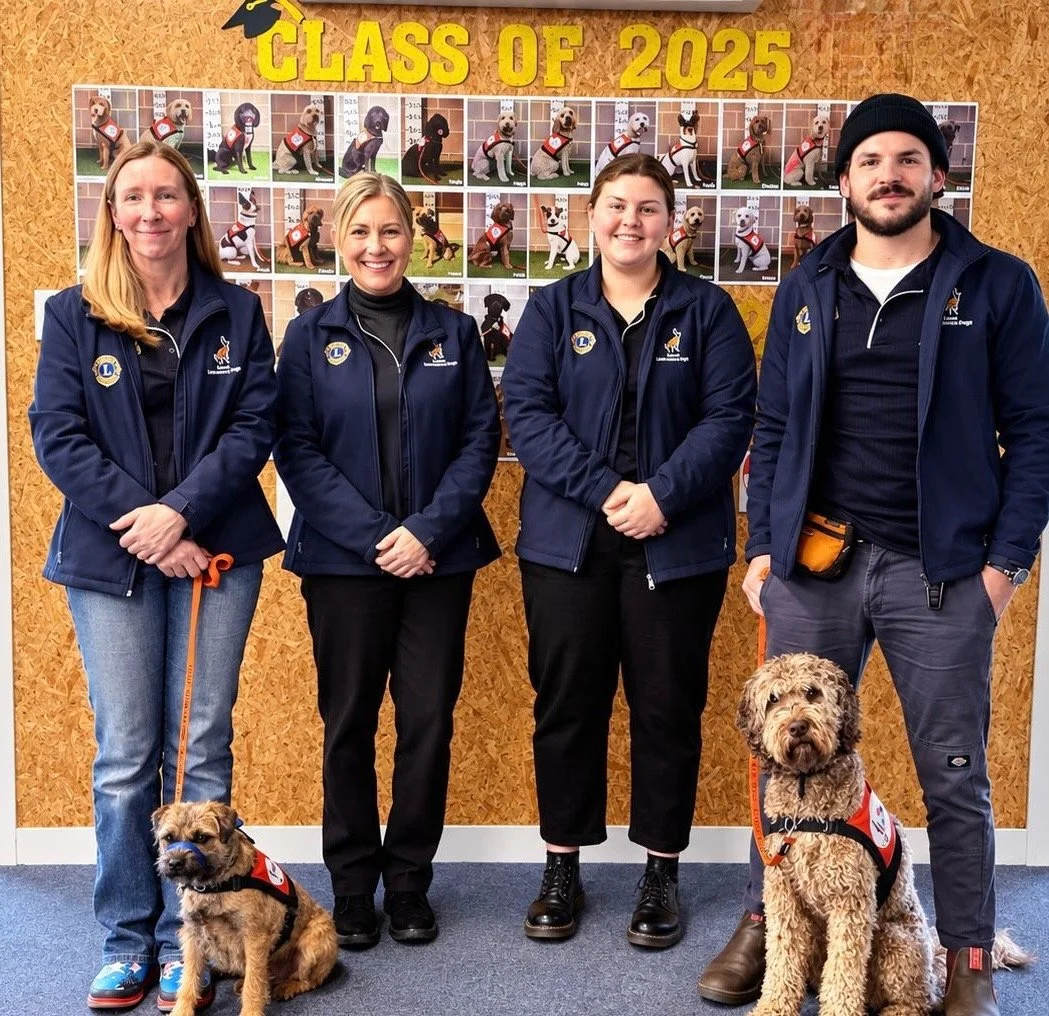
We step inside Lions Assistance Dogs to see them at work and meet the people behind it all
A paw touches a leg. Within seconds, the dog has turned an ordinary sound into an important warning.
It could be someone at the front door, a ringing phone or an appliance needing attention. For someone who is deaf or hard of hearing, that simple touch can provide safety, confidence and independence.
The paw touch seems simple but takes months of training. The dog can recognise around ten household sounds, including a boiling kettle, doorbell or oven timer. It finds the sound, alerts its owner with a paw touch and then leads them towards it.
A smoke alarm triggers a different response. The dog touches its owner, then drops to the ground, signalling: “This is danger. Don’t follow me towards it.”
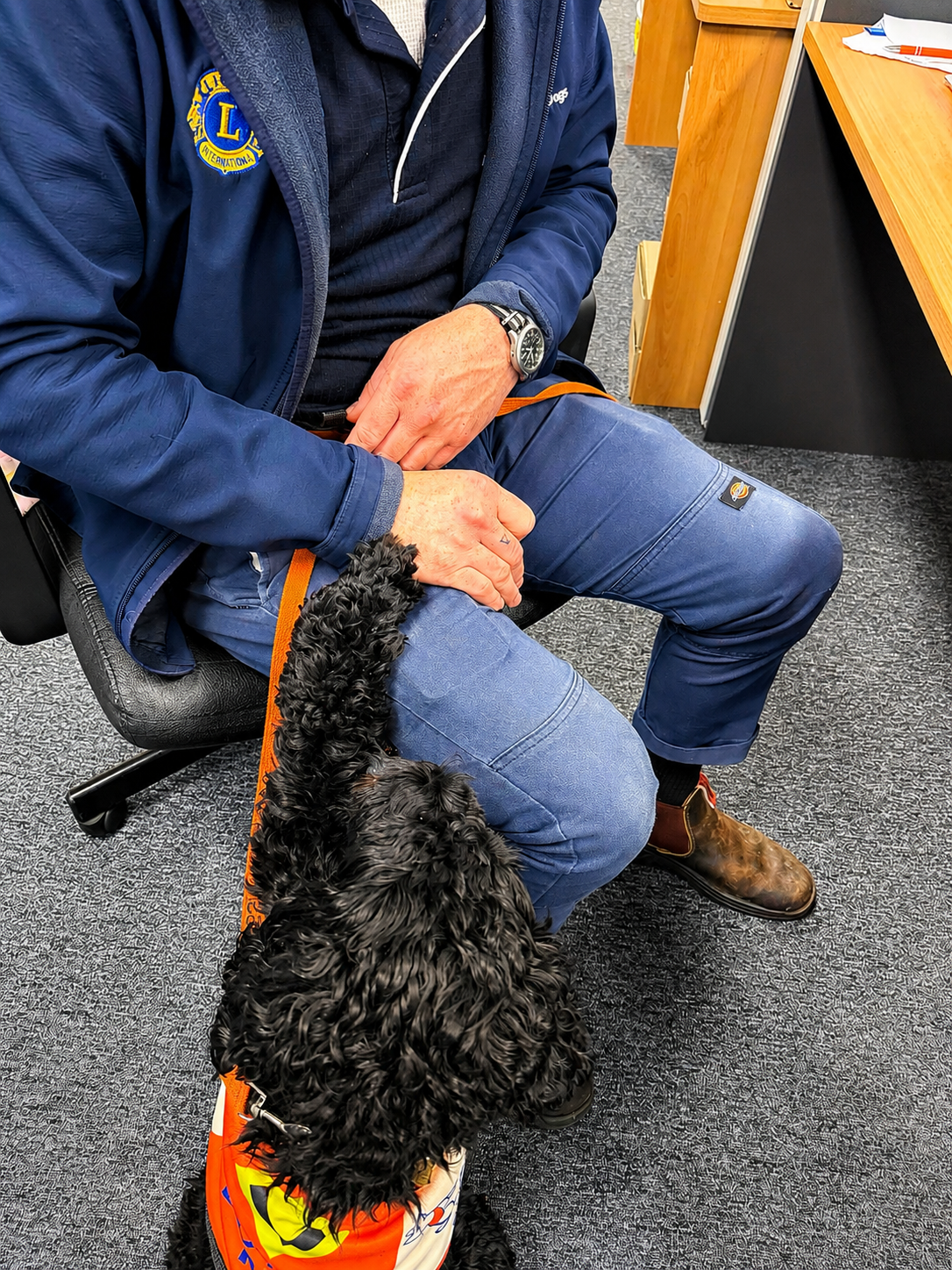
The working dogs we rarely hear about
When people think of working dogs - guide dogs, police dogs and customs dogs are usually the first to come to mind. Assistance Dogs rarely receive the same recognition, and many people have little idea of the roles they perform.
These dogs aren’t less valuable. They’re simply less understood.
I must admit, I regularly drove past their Verdun location and wondered about the large white sign displaying their former name, Australian Lions Hearing Dogs. What was it all about? Were the dogs deaf?
Curiosity eventually got the better of me, so I attended one of their open days to find out. Today, their new name, Lions Assistance Dogs, provides a much clearer picture of the important work they do.
What I discovered was that hearing is only part of the story. The organisation started with Hearing Assistance Dogs in 1980, but has since expanded to train Medical Assistance Dogs for people living with type 1 diabetes and Psychiatric Assistance Dogs supporting veterans with PTSD.
Calm is part of the training
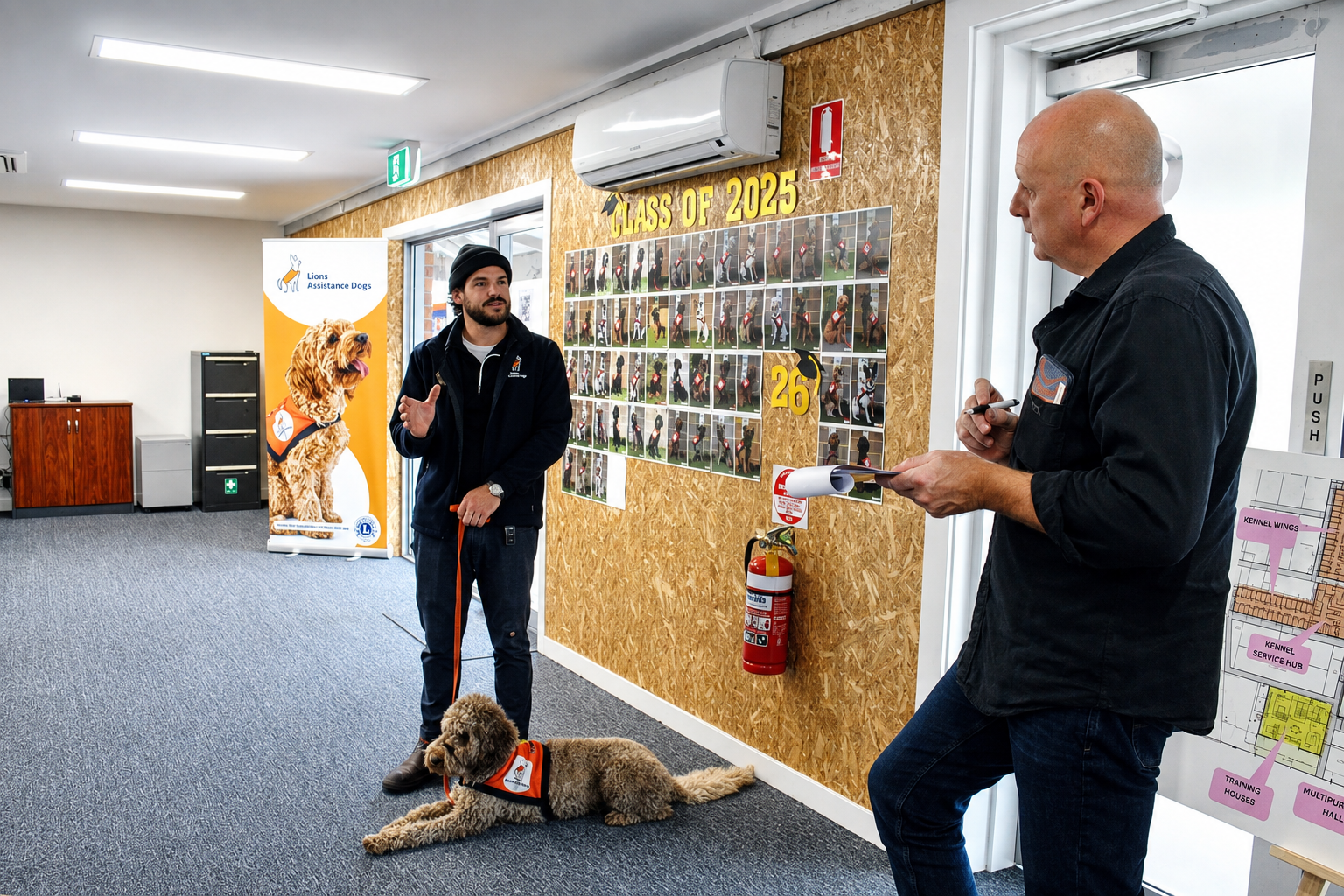
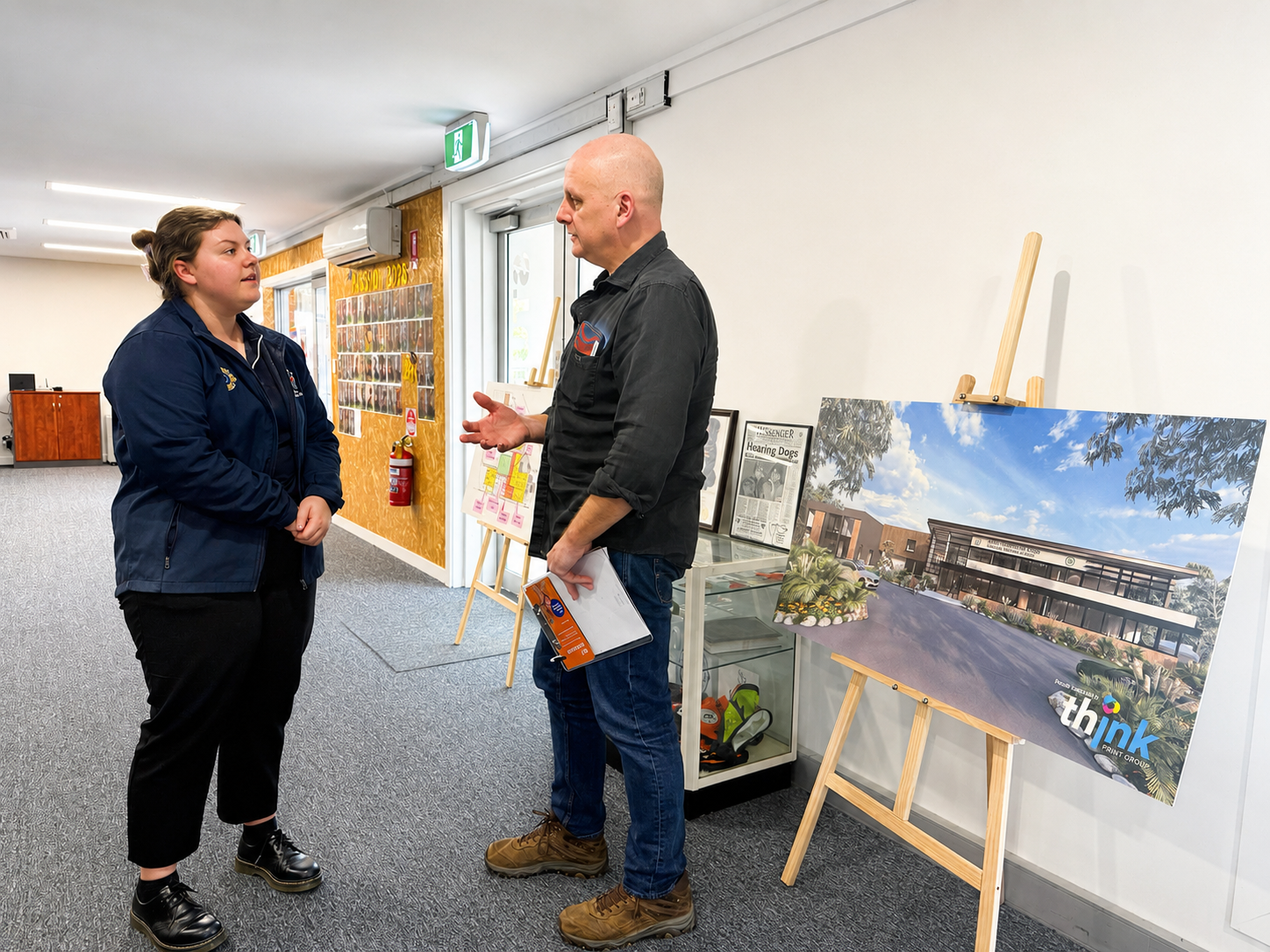
While their Verdun site is being redeveloped, Lions Assistance Dogs is temporarily operating from the former Mitre 10 building in Hahndorf. We were warmly greeted by Community Engagement Coordinator Jess, Training Manager Nick and trainer Nikki.
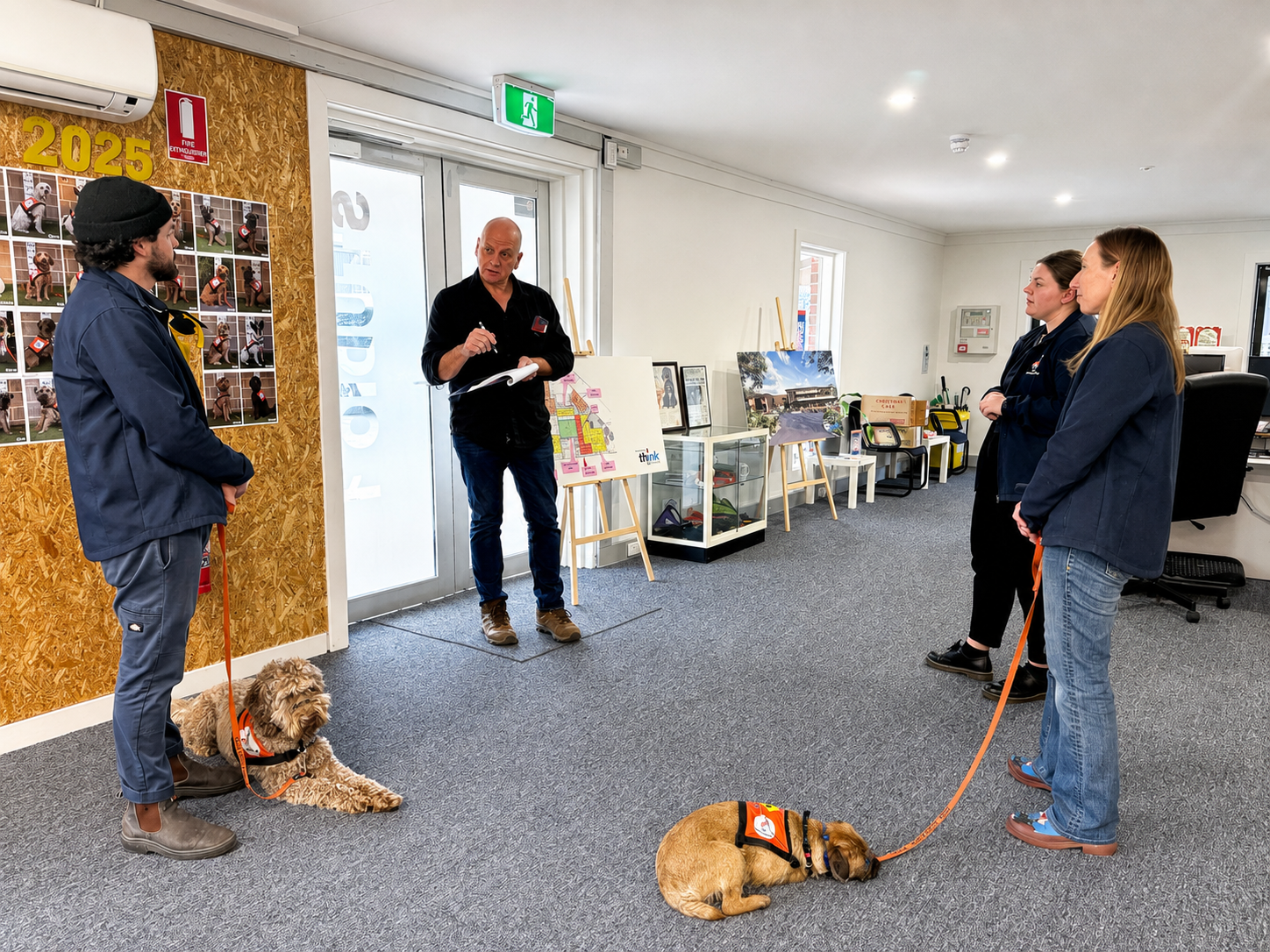
I expected barking dogs and trainers calling commands. Instead, I was struck by the quiet atmosphere and calm demeanour of everyone we met.
Nick explained that every dog learns differently. Trainers may be working towards the same outcome, but they must adjust their approach to suit the dog in front of them. Training involves repetition, patience and staying calm when things don’t go to plan. If frustration takes over, the dog senses it and the session can quickly unravel.
The calmness of the team wasn’t accidental. It was an essential part of the training.
What makes a great trainer?
You might assume that loving dogs is enough to get a job here. I asked Nick what they really look for in a trainer.
“The willingness to want to help people. That’s probably the biggest thing,” he replied. “It’s not just working with dogs; it’s working with people as well.”
Loving dogs might attract someone to the job. Caring about people is what makes them suitable for it.
Learning the job
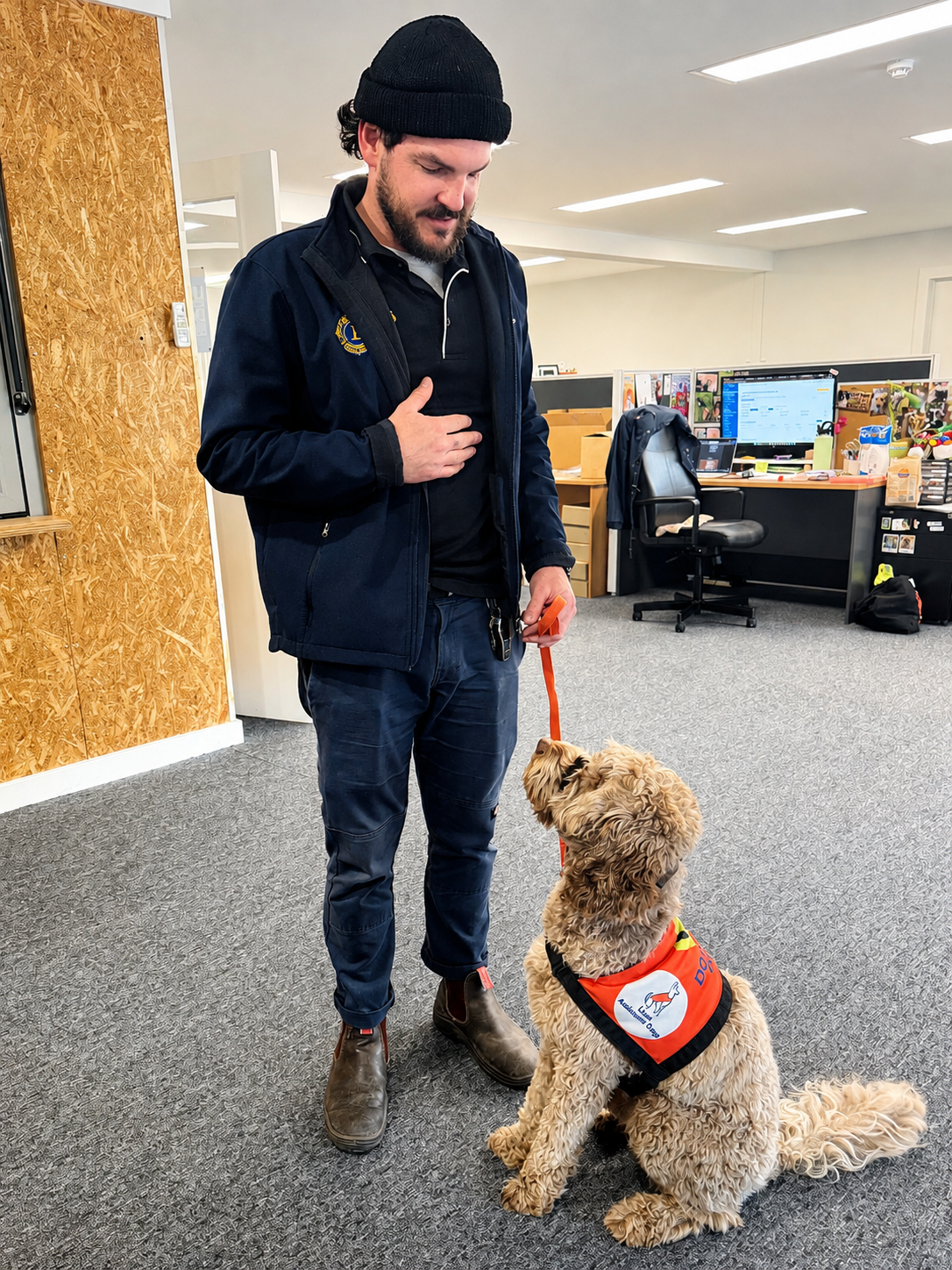
There is no standard path to becoming a trainer. Members of the current team have backgrounds ranging from dairy farming to dog agility and doggy daycare. Experience with dogs is helpful, but not essential.
New recruits complete a 12–18 month cadetship, shadowing experienced trainers while studying dog behaviour and training. They also learn Auslan (Australian Sign Language) and ways to support the people who will eventually receive the dogs.
Training extends well beyond the centre. Dogs are taken into Hahndorf, cafés and busy shopping centres, where they learn to remain focused around traffic, crowds, food and other distractions. Back at the centre, they practise the specific tasks they will eventually perform for their recipient.
Orange means working
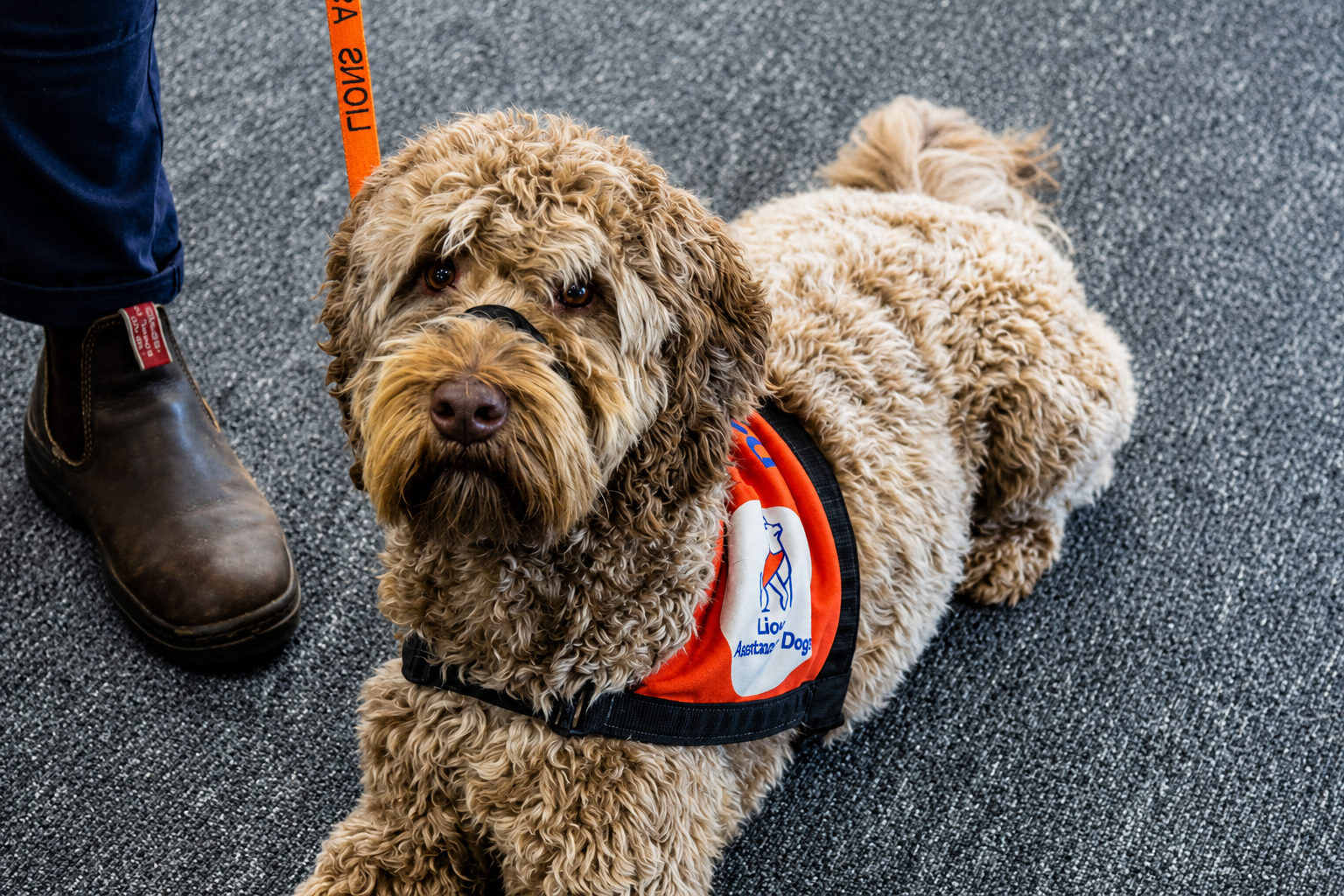
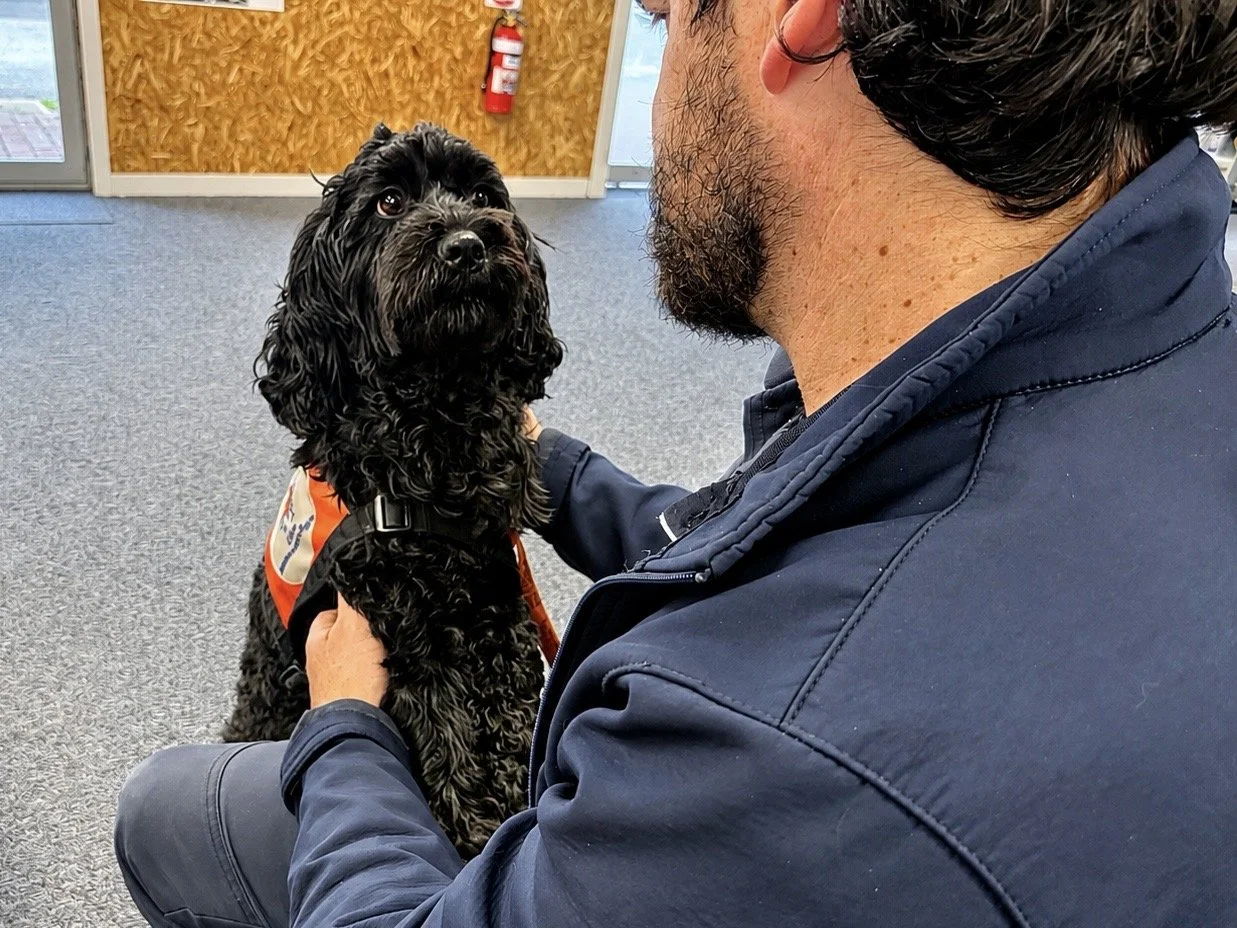
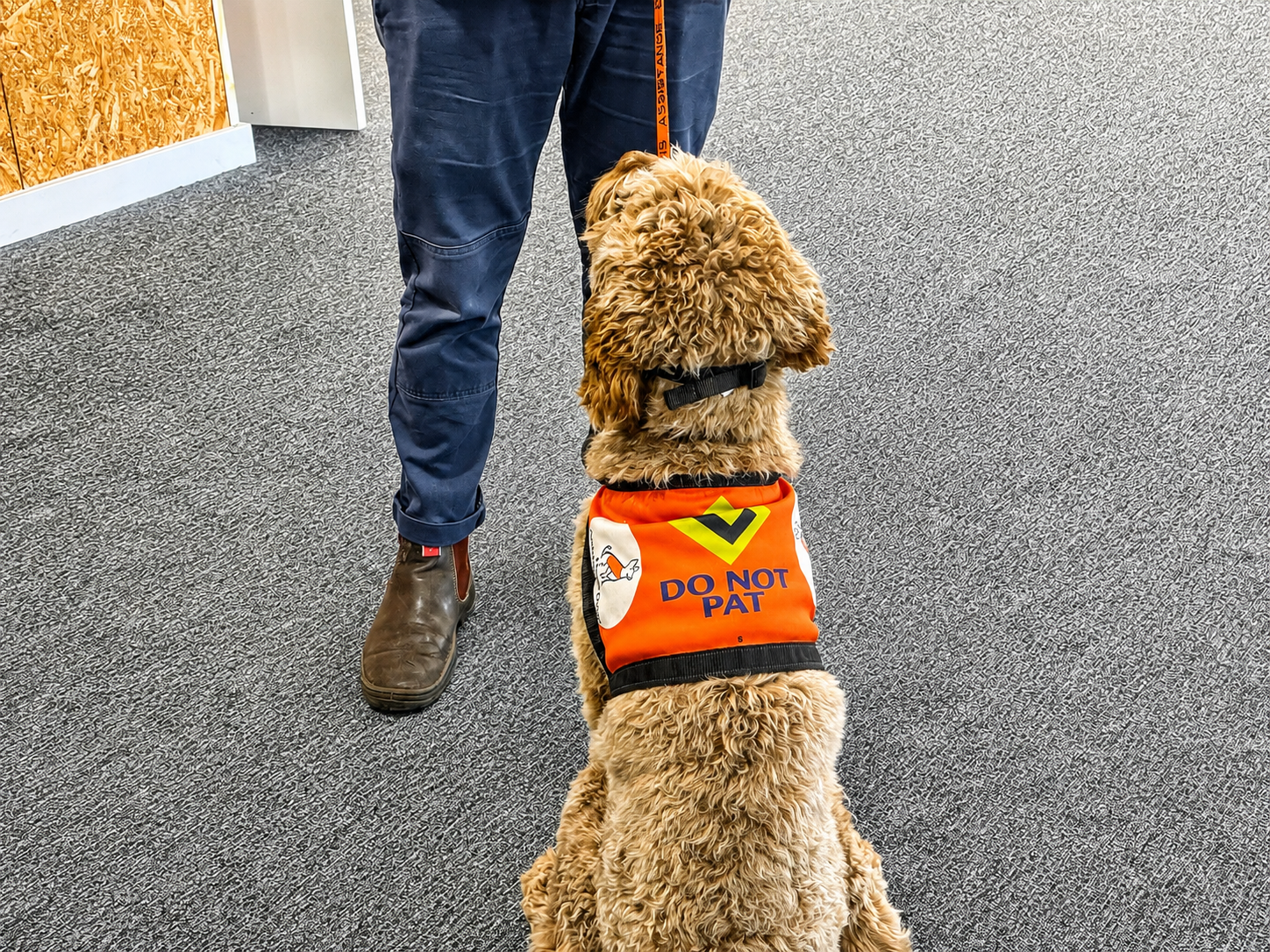
Assistance Dogs wear a bright orange jacket while working. Dogs still in training also carry a small L-plate, but every jacket displays the same clear message: “Do Not Pat.”
When the jacket is on, the dog is working. A pat, treat or friendly call can distract it from the person relying on its full attention.
The jacket also protects the recipient’s privacy. It does not reveal whether the dog is providing hearing, medical or psychiatric support.
More than an alert
A Medical Assistance Dog can detect changes in blood glucose levels through scent, sometimes 10 to 15 minutes before technology sends an alert. It can retrieve its owner’s diabetes treatment kit, find another person or press an emergency button.
Psychiatric Assistance Dogs can interrupt signs of anxiety, provide comfort during distress and help bring a veteran’s attention back to the present moment.
Technology can send an alert. A dog can respond, provide companionship and remain beside its owner afterwards.
Nick summed it up perfectly: “You get two dogs for the price of none.”
The true cost of changing a life
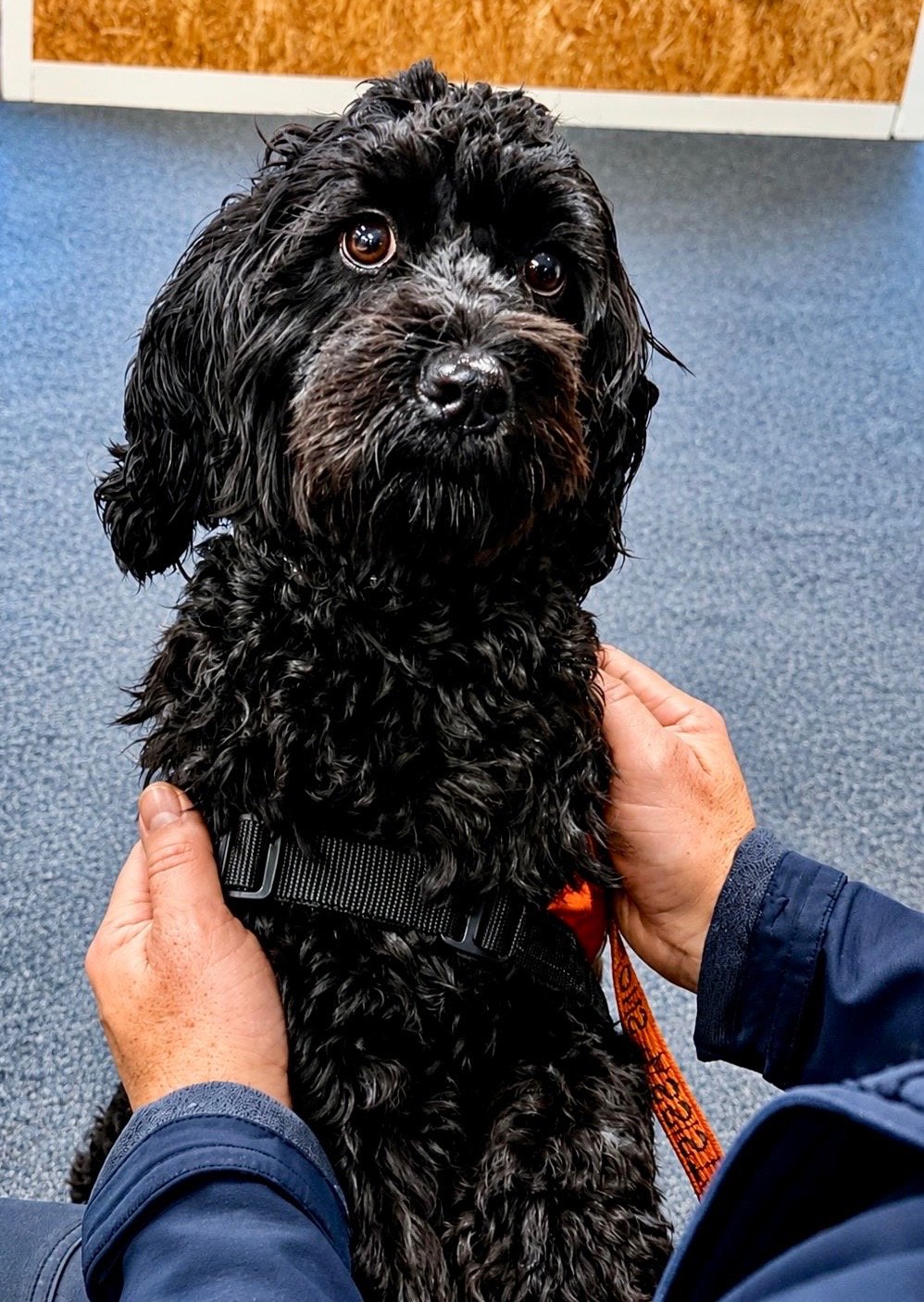
Each dog costs approximately $40,000 to breed, raise, train and place, yet the recipient pays nothing. The service is funded through donations, fundraising and the support of Lions Clubs across Australia.
Jess explained why the organisation may not have the same public profile as some other working-dog organisations.
“If we had $40,000 for advertising, we’d say, ‘No, that’s a dog.’ We’re all about the dogs.”
Local Lions Clubs also support recipients after a dog has been placed, helping the training team monitor the new partnership. That practical support can develop into genuine friendship.
Matching the right dog with the right person is another important part of the process. Different breeds, sizes, personalities and temperaments allow the team to consider the recipient’s needs, lifestyle and living situation.
When access is denied
For Nick, one of the toughest parts of the job has nothing to do with a dog failing to learn a task. It is hearing that a recipient has been turned away from a shop, shopping centre or public transport service simply because of their Assistance Dog.
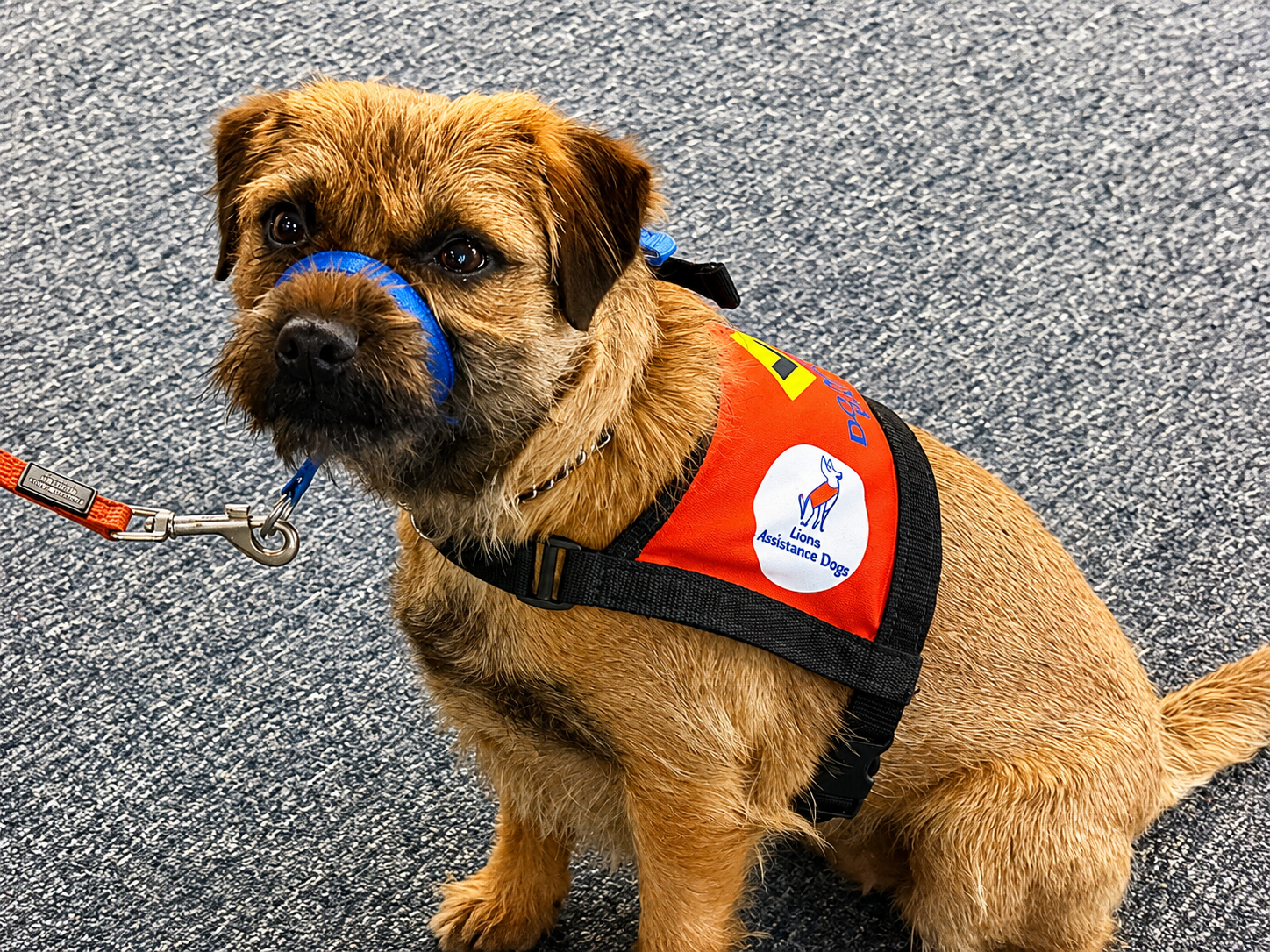
Smaller Assistance Dogs are sometimes mistaken for ordinary pets, even while wearing their uniform.
For someone who has already struggled to leave home, that public rejection can be devastating. The dog may have helped rebuild their confidence, only for one poorly handled encounter to set them back again.
Marlin makes life possible again
Jess told us about Marlin, a Border Terrier paired with a veteran living with PTSD.
Before Marlin entered his life, the man had become isolated. Today, he visits the Central Market, gets out into the community and carries himself with far greater confidence.
Marlin was trained to interrupt behaviours that may signal growing anxiety, such as rubbing hands together or bouncing a leg. Their connection has become so strong that Marlin now responds before some of those behaviours even begin.
The sound that may have saved a life
Then Jess shared a story that stopped us in our tracks.
A Hearing Assistance Dog repeatedly alerted its owner to an unfamiliar sound inside a family member’s home. When nobody could identify it, they followed the dog.
It led them to a newborn baby who had rolled over and was struggling to breathe.
The dog had been trained to recognise a baby crying, but this was a different sound. Somehow, it knew something was wrong.
This was no clever demonstration. The dog’s alert may have saved a life.
The hardest part is letting go
Jess admitted that she once wondered whether she would become too attached to the dogs. One had found a special place in her heart, and she expected saying goodbye to be difficult.
When the day arrived, the dog looked at her, and something simply clicked.
“She was ready to go,” Jess recalled. “She was ready for her next adventure.”
Jess’s story also revealed one of the emotional realities of the job. The team invests months in building trust, developing skills and preparing each dog for its future.
Success ultimately means letting it go.
What we learnt was that behind every Assistance Dog that changes a life is a team of people with the patience, skill and heart to train it.
Learn more, volunteer or support Lions Assistance Dogs

Photo/Video credits: Kate Needs
Should you wish to receive Feature Stories, What’s On Guide, Event Reviews, Beyond Adelaide to your inbox, please subscribe below: