What Really Goes On Inside JamFactory?
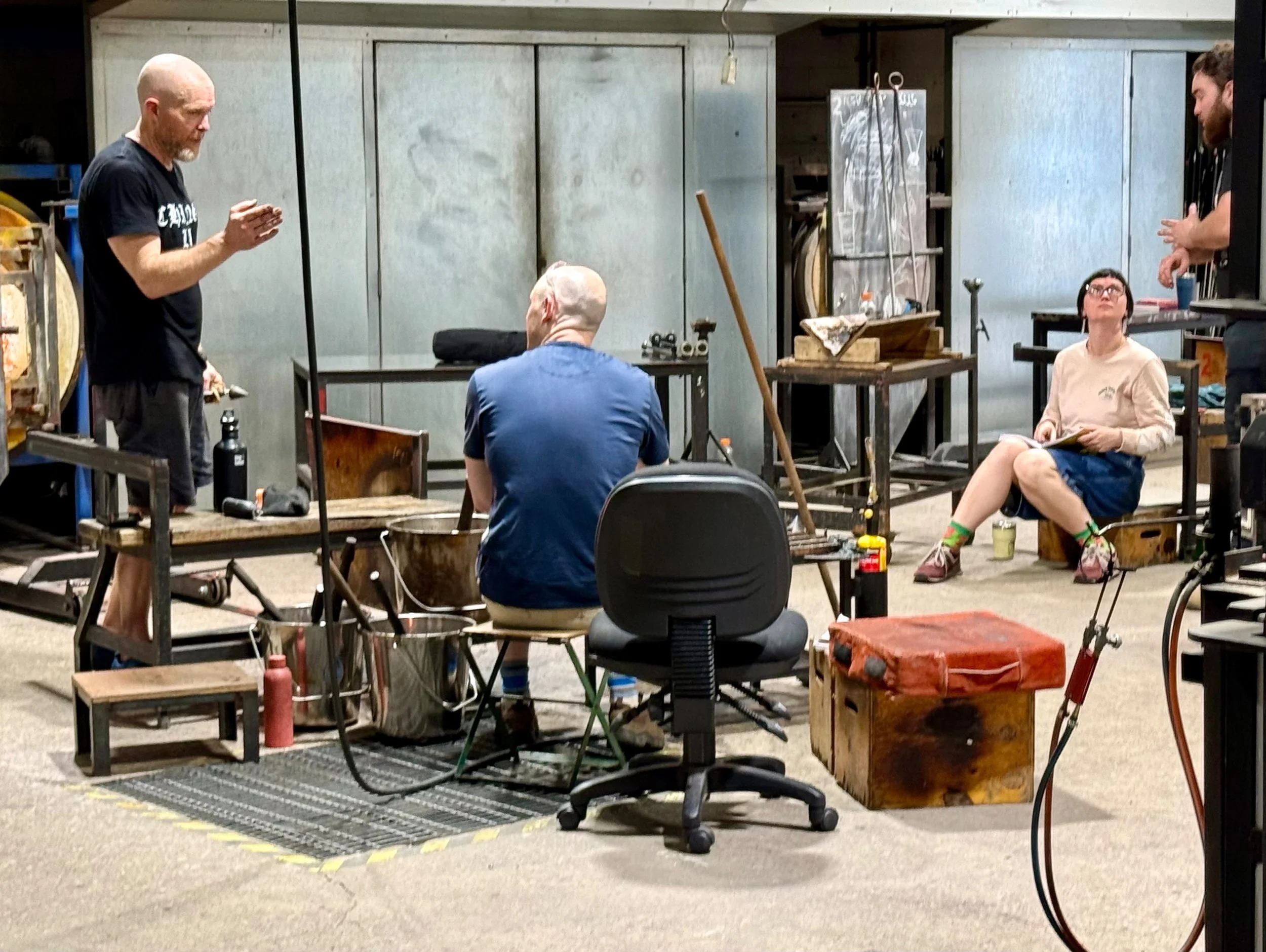
Inside JamFactory’s glass studio
Beyond the gallery, JamFactory is preserving traditional skills while shaping Australia’s next generation of artists.
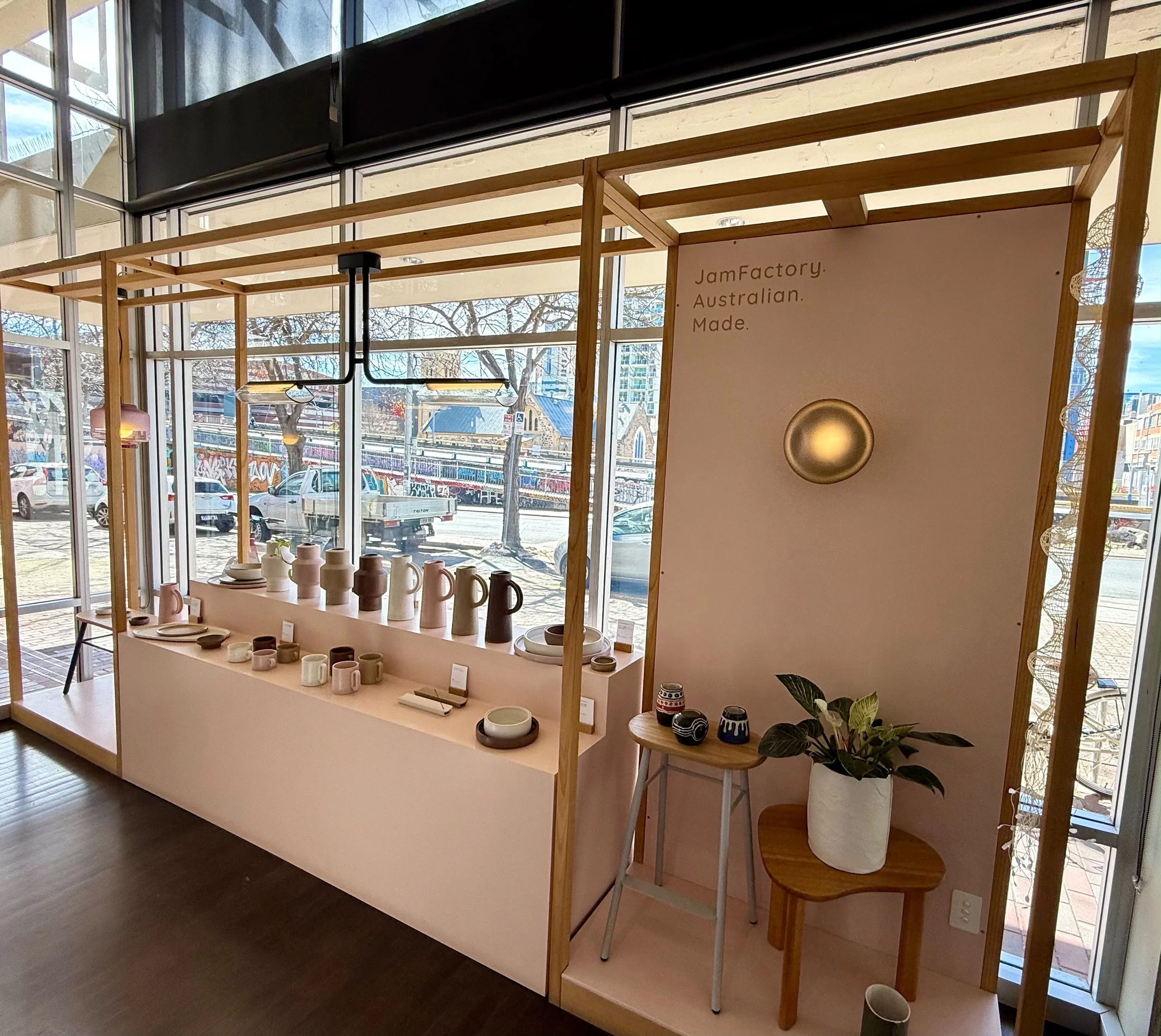
I thought I knew what JamFactory was. A stylish gallery, a shop filled with beautifully made objects and a viewing platform where visitors could watch glassblowers at work. Impressive, certainly, but reasonably straightforward.
Then we joined the tour.
Beyond the polished exhibition rooms, the building opened into a network of workshops, artist studios, furnaces, kilns, machinery and creative spaces. Our guide, Catherine, described it as being like the TARDIS: it appears much smaller from the outside than it is within. She was right.
The finished objects may draw people through the front door, but the real story of JamFactory is everything that happens before they reach the display shelf.
So, What Exactly Is JamFactory?
Put simply, JamFactory helps Australian artists turn ideas into objects and talent into a sustainable career.
It is part gallery, part shop, part training ground and part working factory. Around 220 artists from across Australia are represented in its retail spaces, while four specialist studios support glass, ceramics, furniture and jewellery/metal.
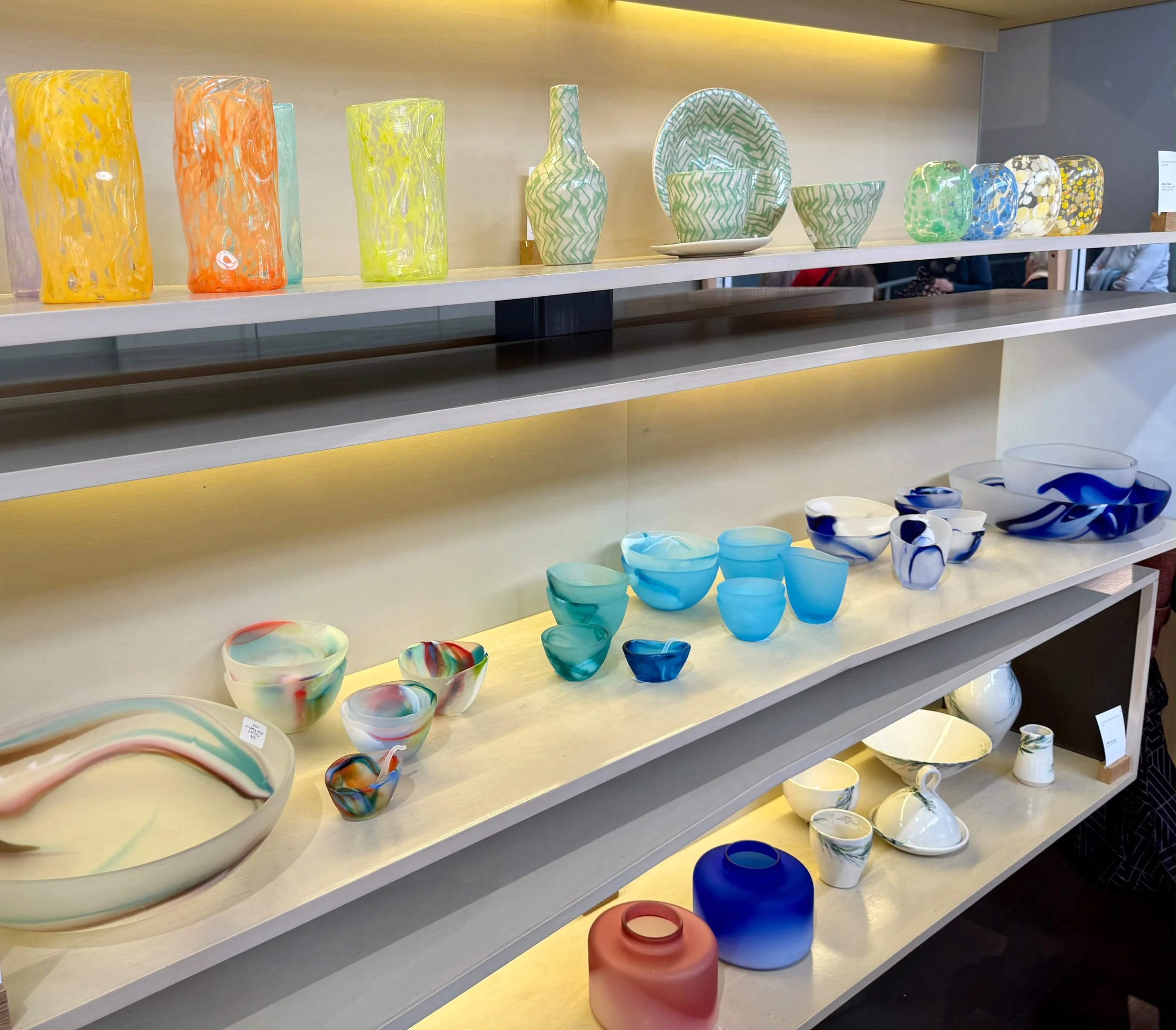
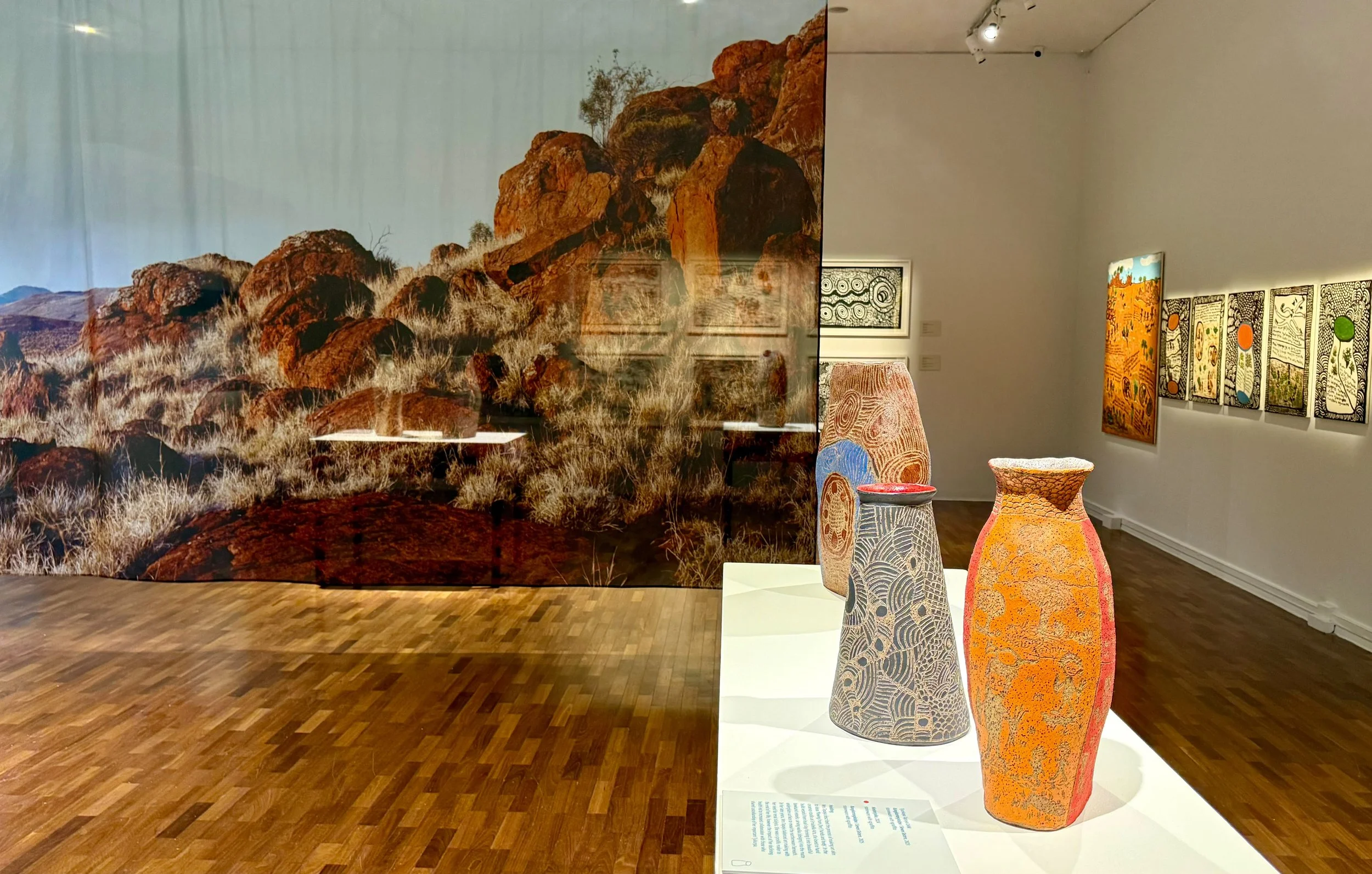
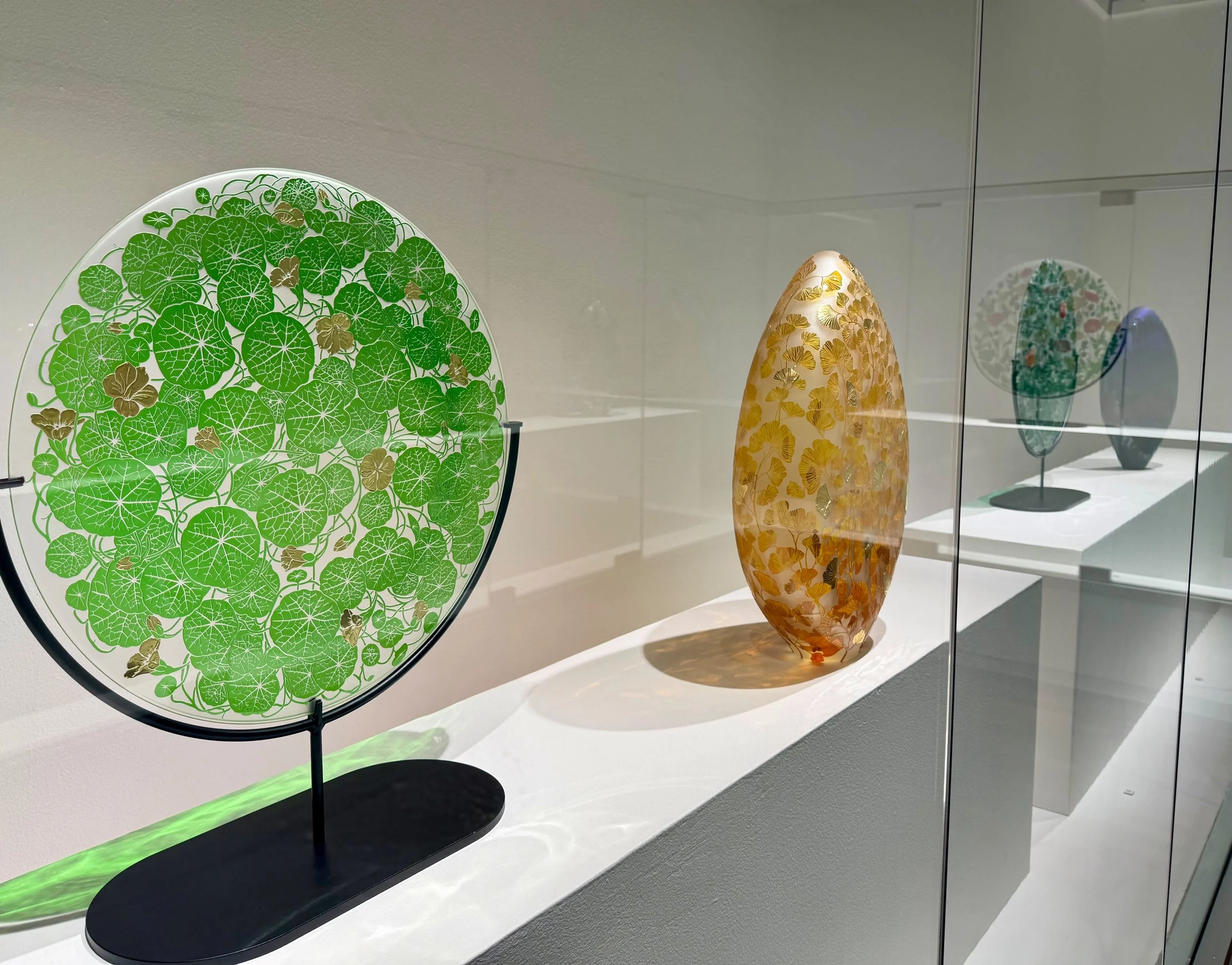
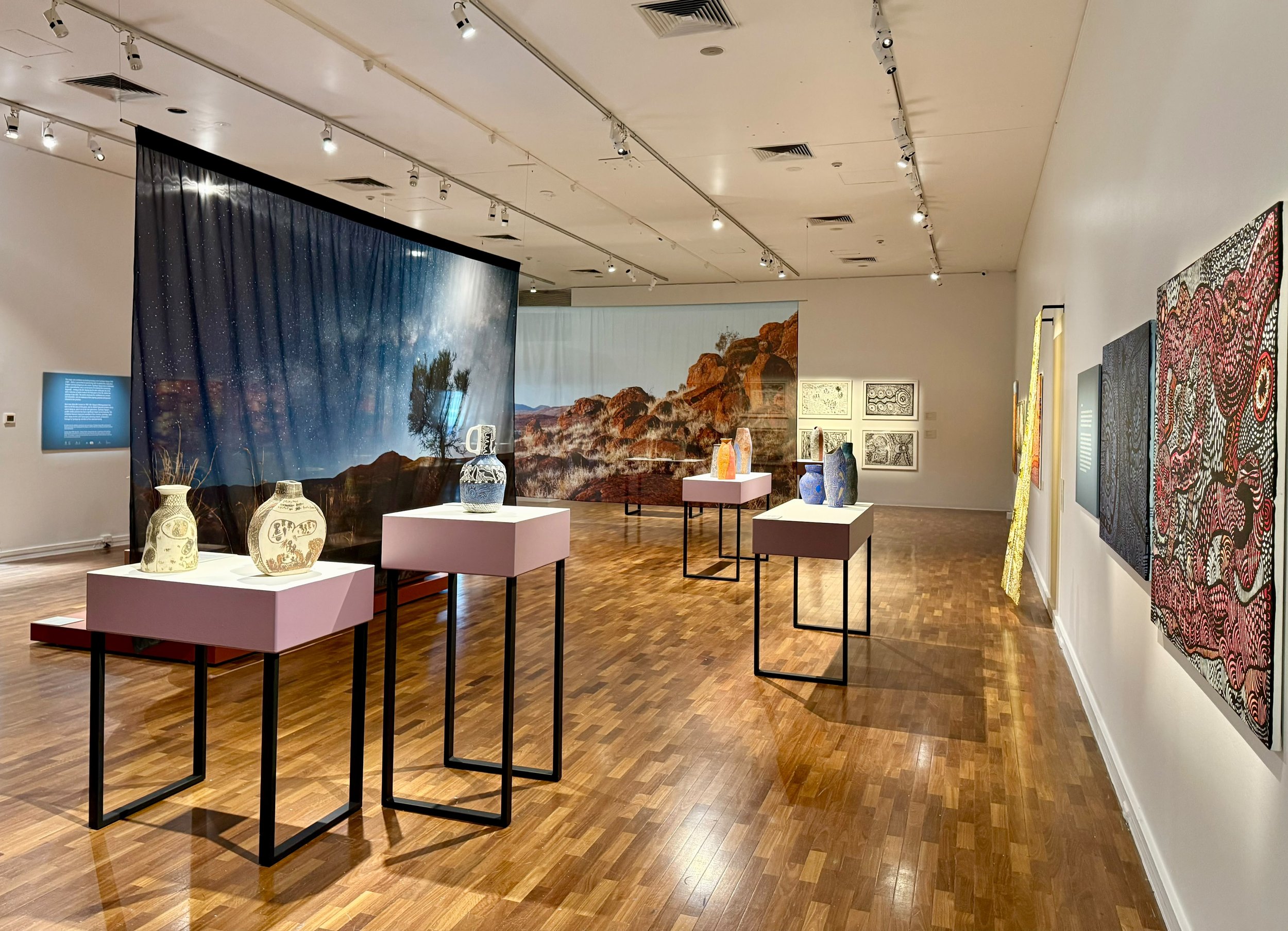
The front rooms showcase the finished pieces.
The front rooms showcase the finished pieces. Take the tour and you discover how they come to life.
Emerging artists gain access to equipment they may never be able to afford alone, along with experienced mentors and the practical guidance needed to develop their craft. Established makers also visit to teach masterclasses, share their knowledge and, judging by the applause we heard, receive something close to rock-star treatment.
JamFactory does not simply display Australian creativity. It helps it survive.
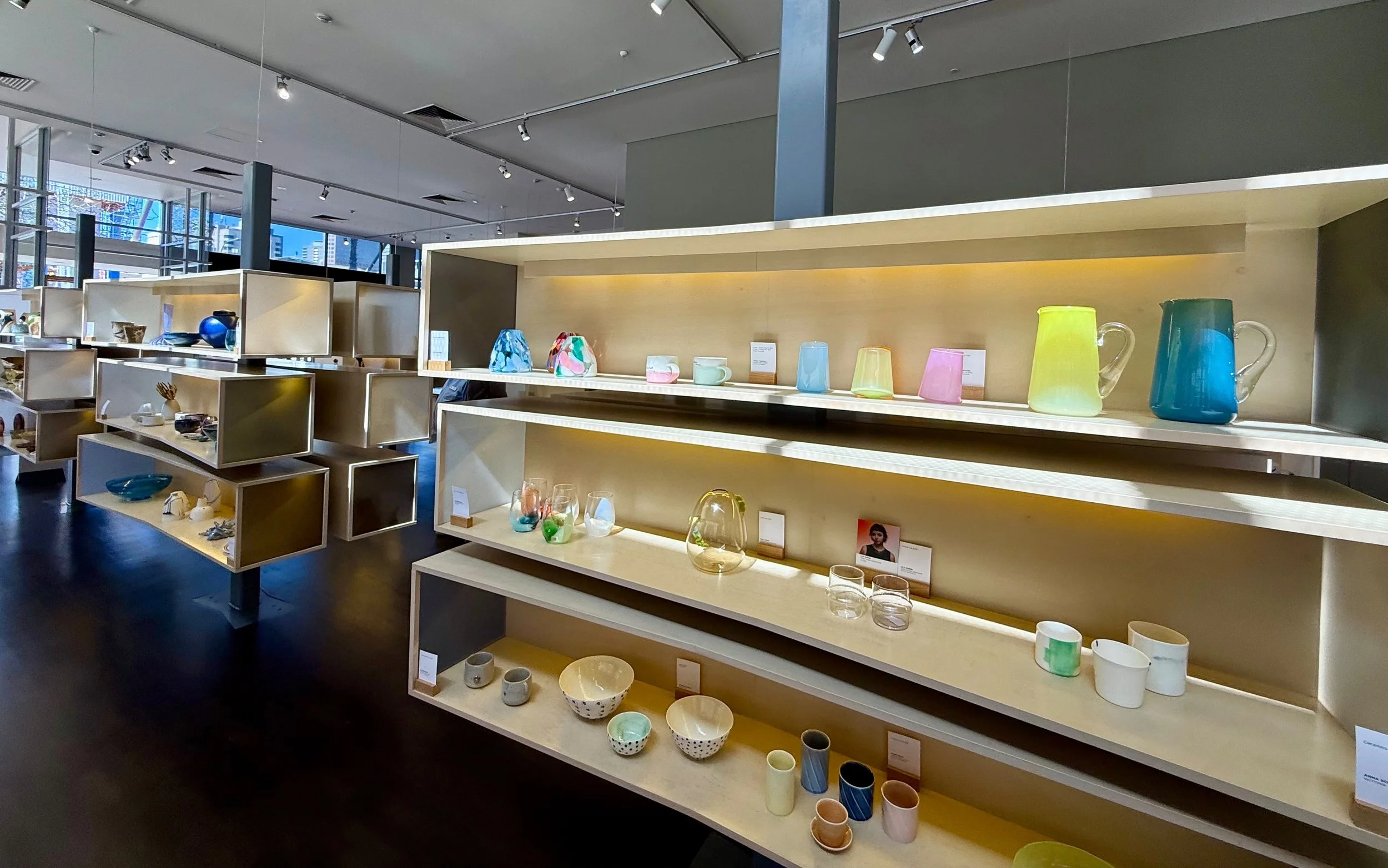
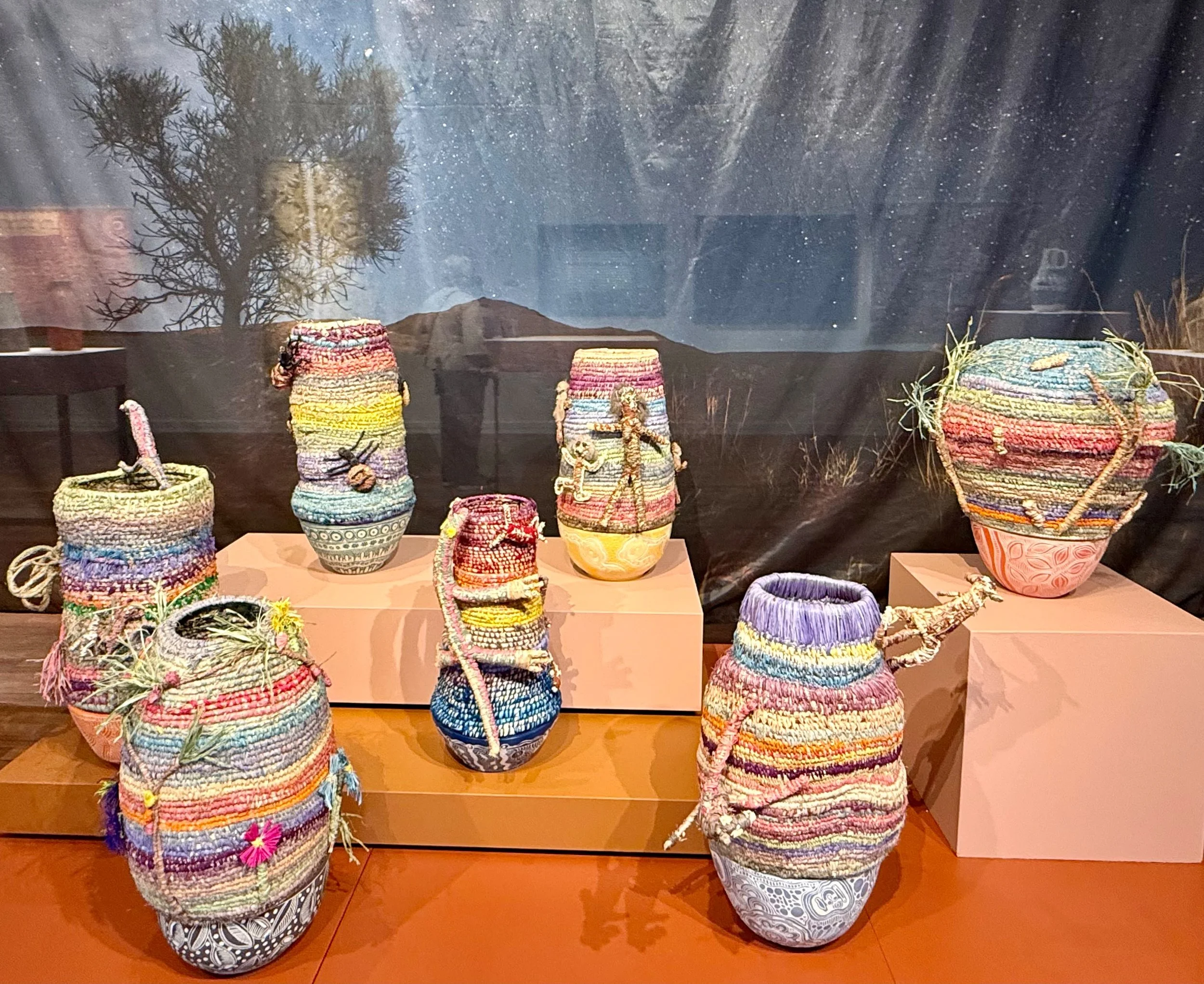
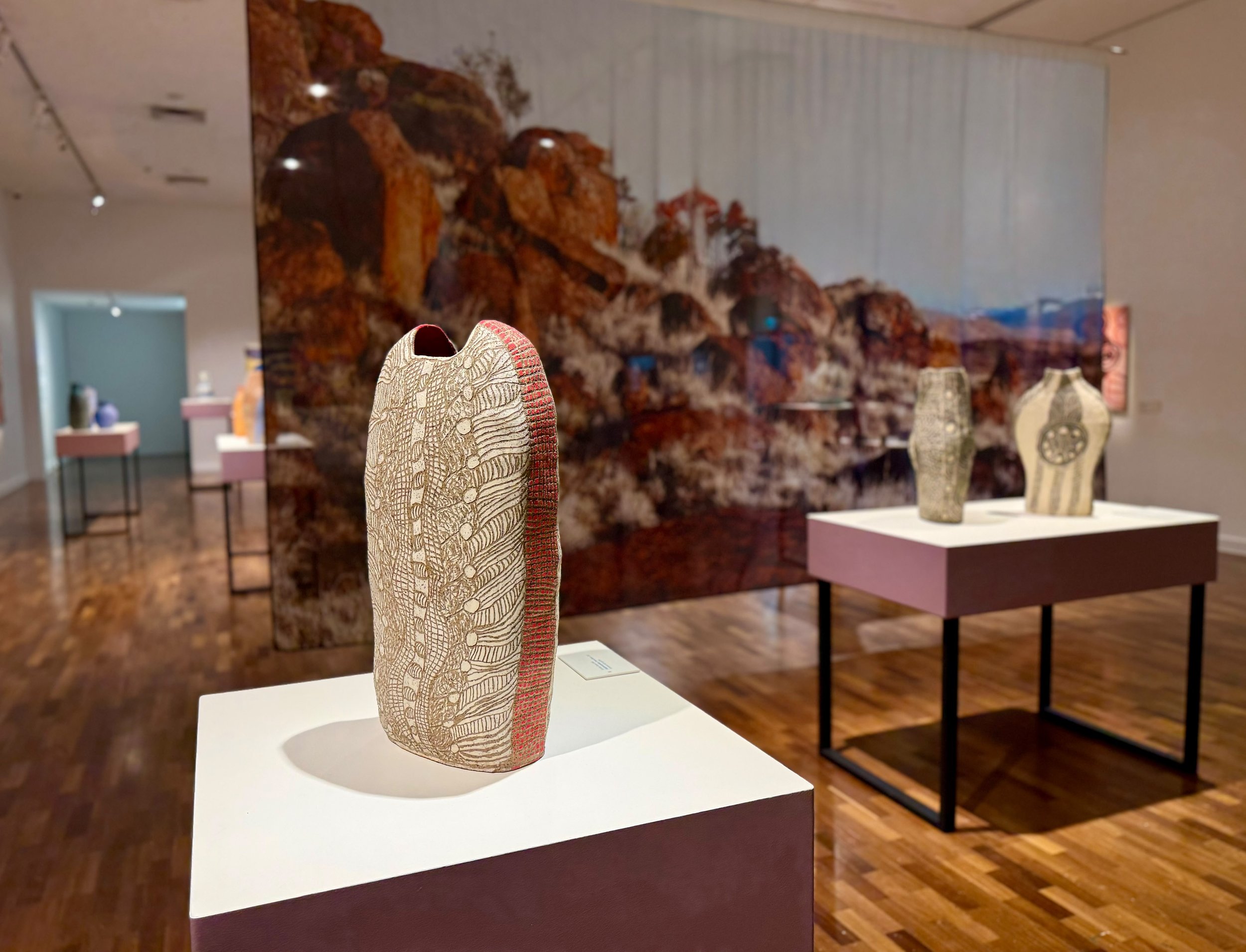
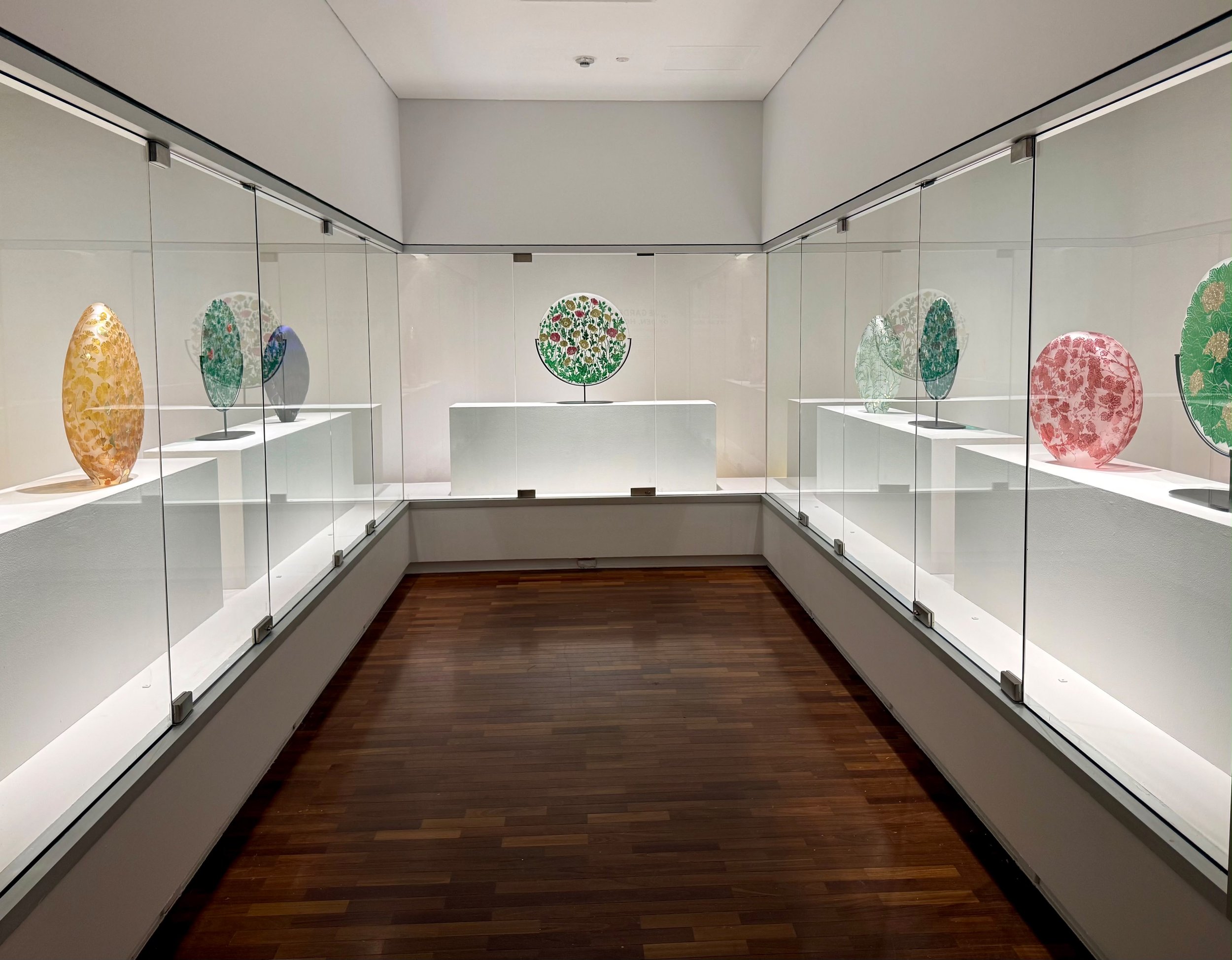
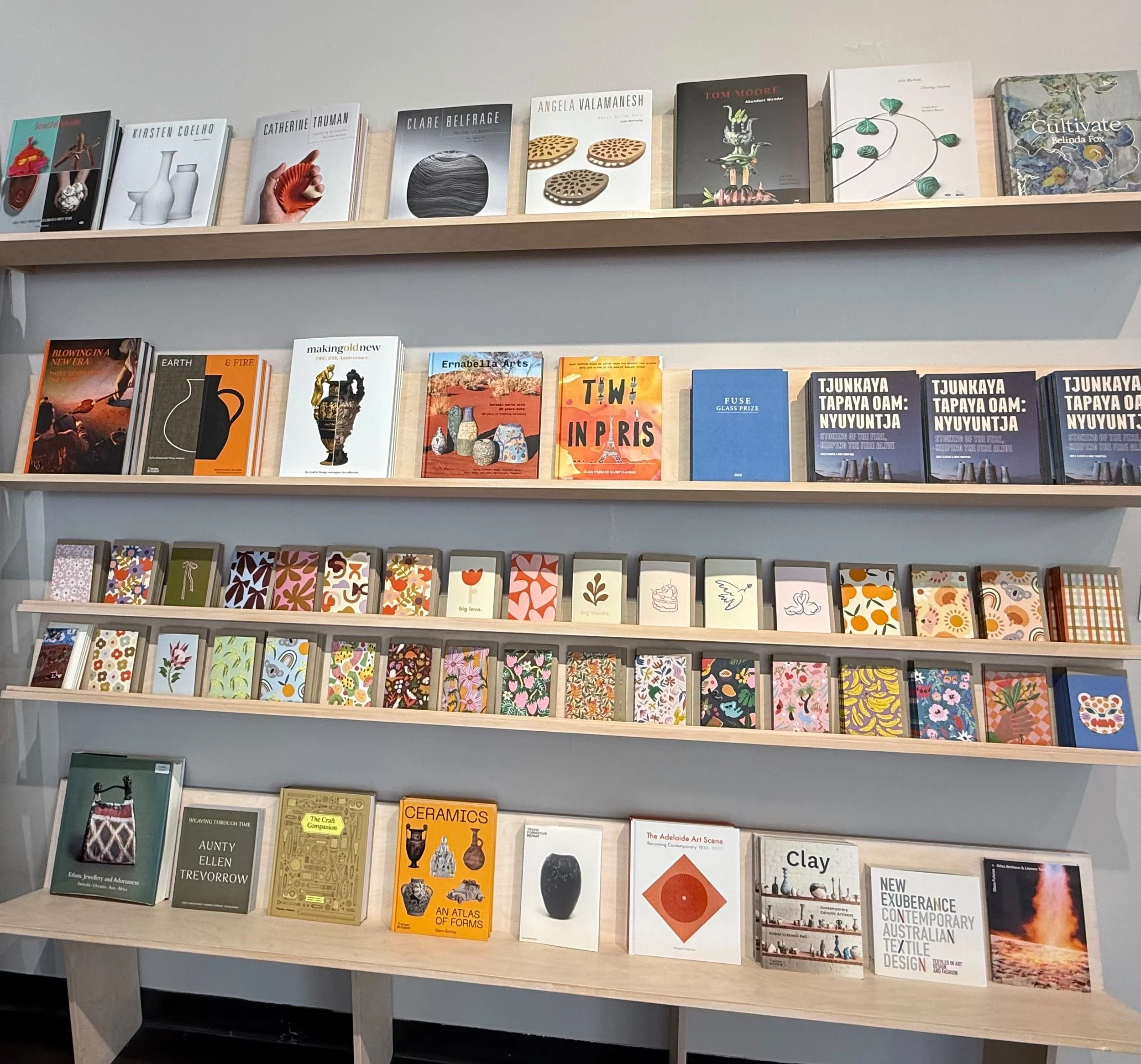
JamFactory gallery and retail display
Why Is It Called JamFactory?
The story behind the name is simpler than you might expect. JamFactory was established in 1973 under the Don Dunstan government as a craft training workshop inside an old jam factory on Payneham Road at St Peters.
Dunstan was a strong supporter of the arts, but the thinking behind JamFactory was practical. He wanted talented people to develop sustainable careers, earn an income from their work and put food on the table.
The organisation moved into its purpose-built Adelaide home in 1992, but kept the name as a reminder of where it began. The old factory is gone, but the original idea remains.
Artists deserve more than applause. They deserve the opportunity to make a living from what they create.
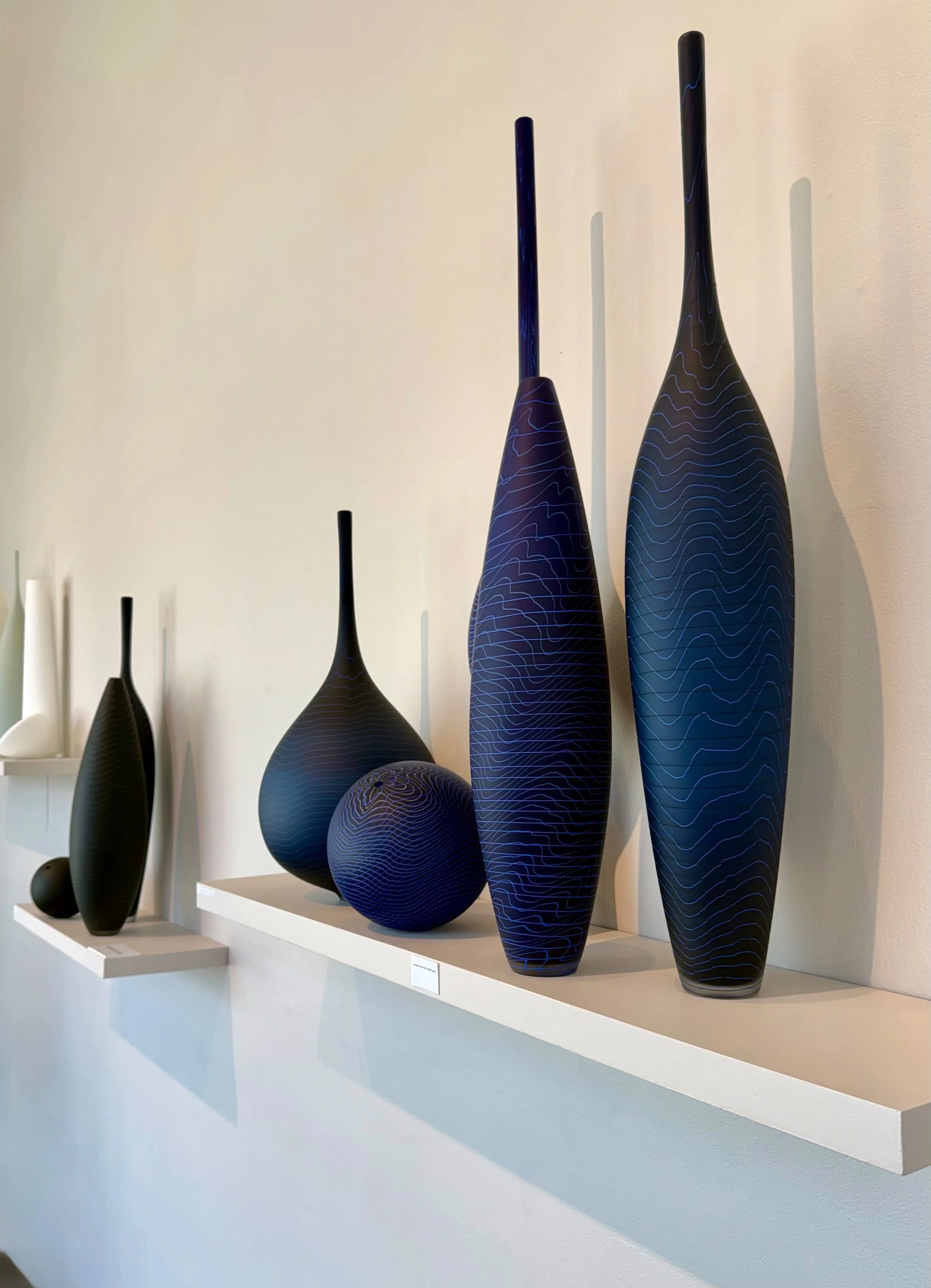
JamFactory represents the work of around 220 artists from across Australia
What’s Hiding Beyond the Gallery?
The tour took us into the working areas normally hidden from casual visitors. Each discipline had its own space, filled with tools, workbenches, kilns, machinery and pieces at various stages of completion.
Behind the gallery are working studios filled with specialist equipment.
Some rooms were remarkably neat. Others carried the dust, offcuts and organised chaos you would expect when ideas are being tested rather than displayed.
It was unusually quiet during our visit, which gave us more time to look around and understand how each area operated. Artist spaces were clearly respected. We were asked not to enter individual work areas or touch anything unless invited. Fair enough, particularly when something may be unfinished, freshly polished or still hot enough to make touching it a very bad idea.
Photography was also restricted on the upper floors. Catherine explained that the concern is no longer just someone copying an idea. Images of unfinished work can now be collected and used to train artificial intelligence, potentially threatening an artist’s livelihood before the piece has even been publicly revealed.
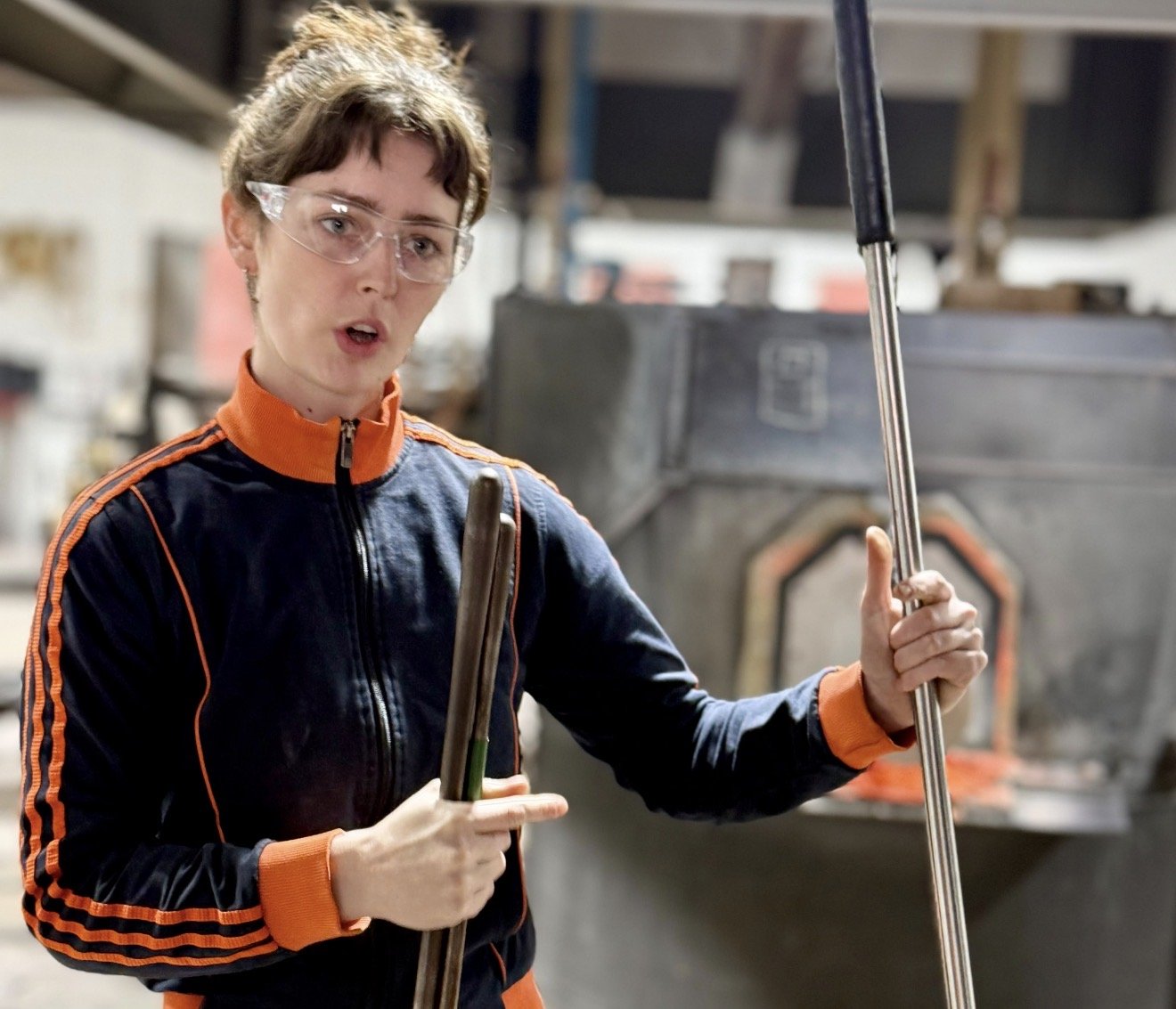
Behind the polished gallery is a working environment built on creativity, trust and respect
How Do Artists Turn Talent Into a Living?
Having talent is one thing. Working out how to make a living from it is another.
JamFactory’s Associate Program helps emerging artists make that leap, but earning a place is not easy. Each department may receive 40 to 50 applications a year. Around five people are interviewed, with only one to three selected.
During the program, associates gain studio space, specialist equipment and guidance from people who understand the craft. They also learn the less glamorous but essential skills of pricing, tax, photography, marketing and selling their work.
Visiting master Brian Corr sharing his knowledge in the glass studio.
Our guide described it as somewhere between a research master’s degree and an unpaid internship. There is no certificate waiting at the finish line. What they leave with is experience, direction and a better chance of turning their talent into a career.
Some focus on exhibitions. Others make products, accept commissions or keep another job while developing their craft. The aim is not to produce cookie-cutter artists. It is to help each person work out what kind of creative career suits them.
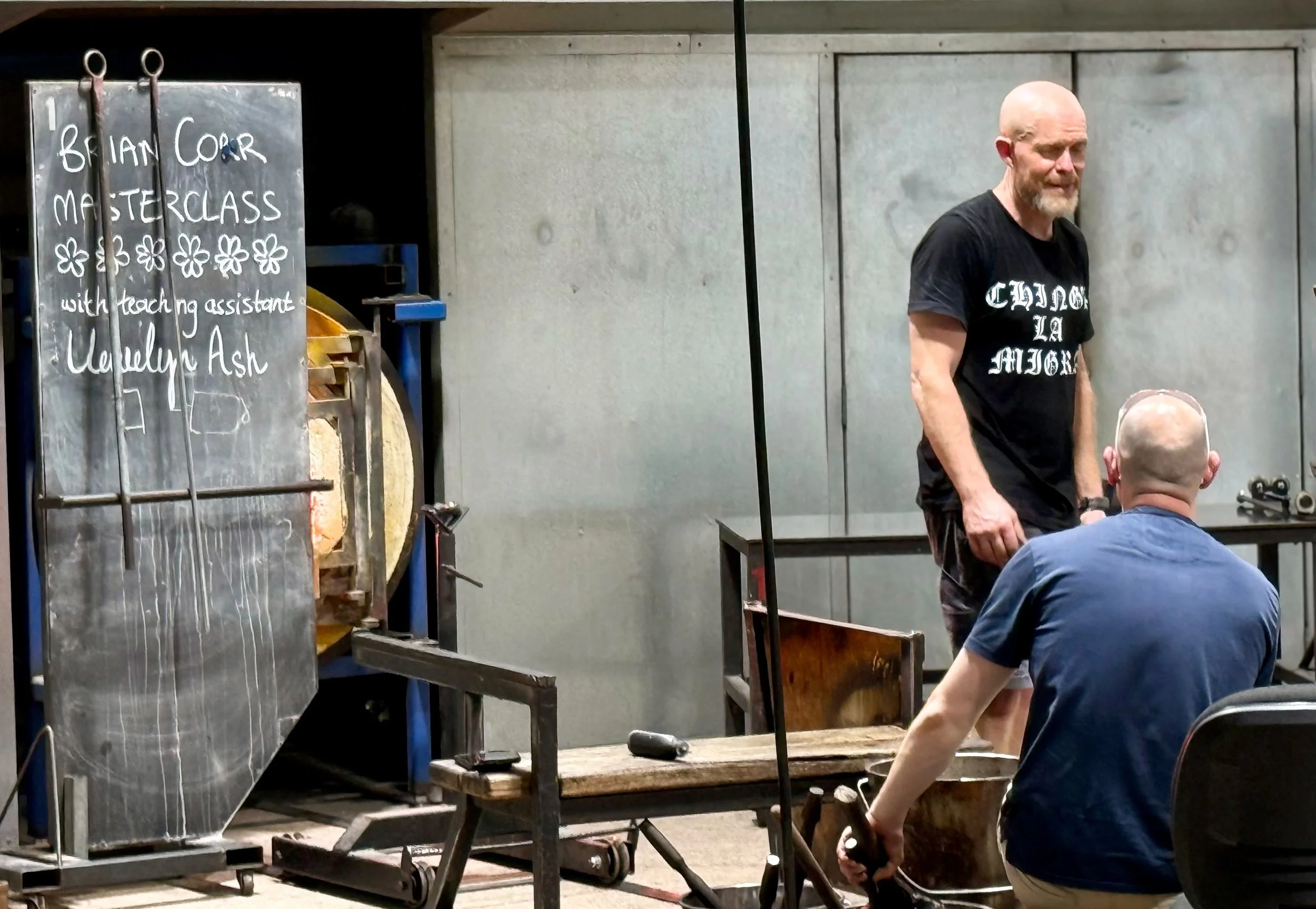
Brian Corr leading a JamFactory masterclass
Why Does the Glass Furnace Never Sleep?
Glassblowing was the part I most wanted to understand, and it did not disappoint.
The first surprise was learning that the furnaces operate 24 hours a day, 365 days a year. They are only switched off for maintenance. Inside, glass is melted at around 1,250 degrees Celsius and kept molten until an artist is ready to collect it.
A long metal blowpipe is placed into the furnace and turned to gather a glowing ball of glass at one end. From there, the artist moves between the workbench and reheating chamber, constantly controlling its heat and shape.
Watching all that heat, one burning question came to mind: how do they blow through a metal pipe without scorching their lips?
The answer is distance and cooling. The molten glass remains at the far end of the long blowpipe, while water is used to cool the pipe. This keeps the handle and mouthpiece safe to use. A simple question, but one I suspect plenty of visitors are thinking.
I had imagined glassblowing as a solitary craft. In reality, it is closer to a team sport. One person may blow through the pipe while another shapes the piece at the opposite end. They communicate throughout the process because timing, trust and knowing the next move are critical.
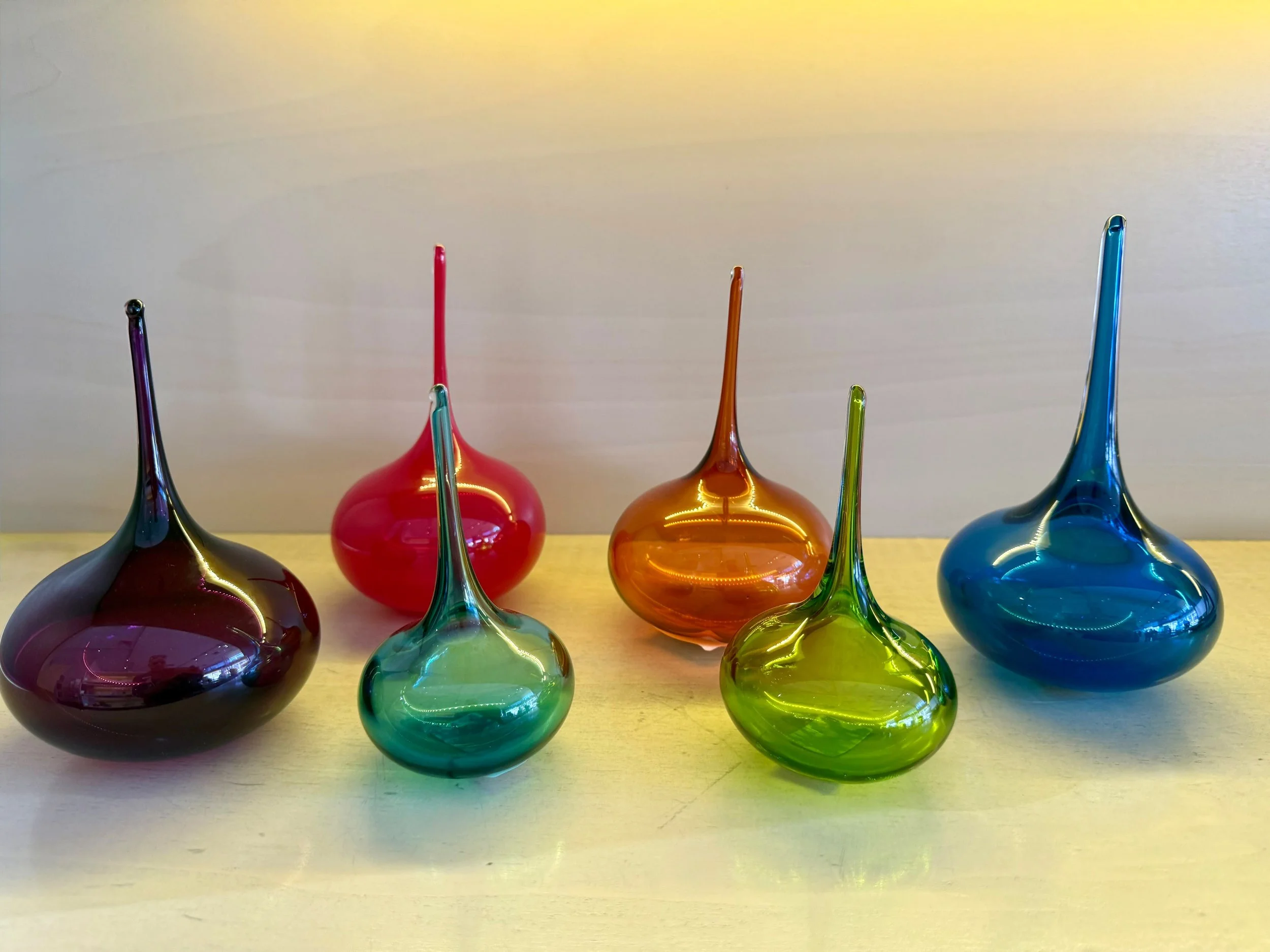
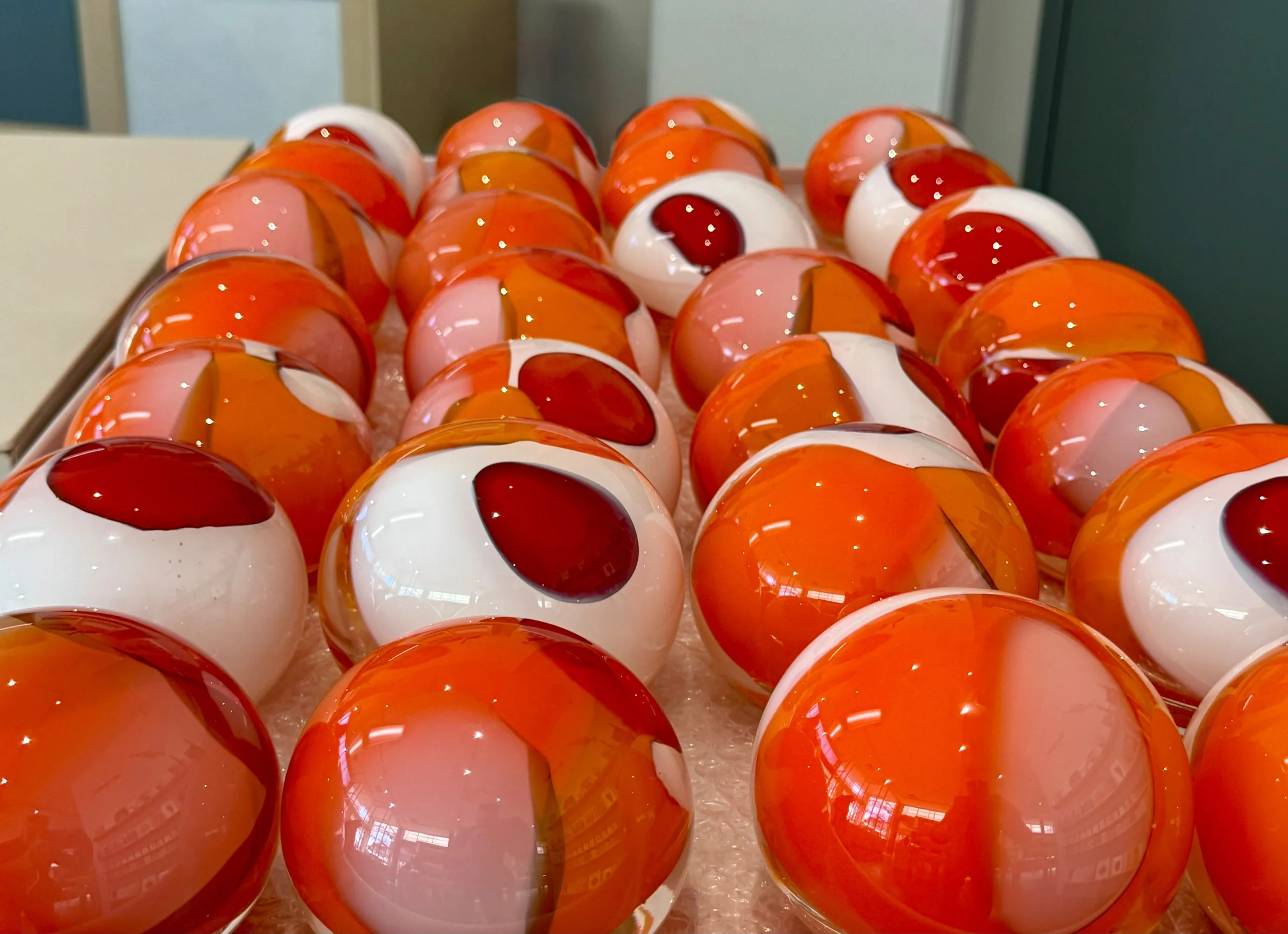
When JamFactory produces its signature Kink bottles, named after the distinctive bend in their necks that forms the pouring spout, between five and seven people each perform a different step. The process resembles a handmade production line.
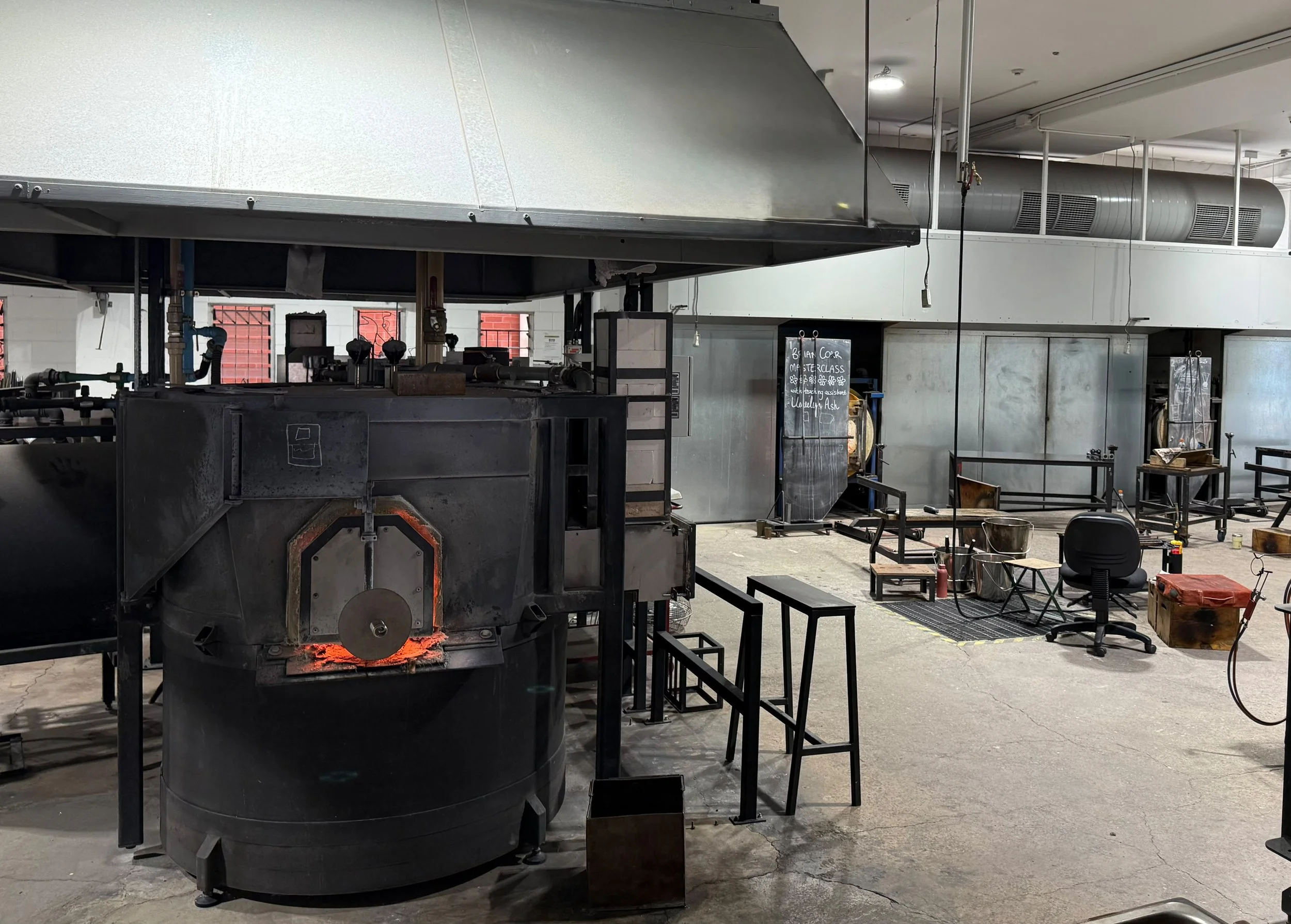
Furnaces inside JamFactory
The distinctive bend gives JamFactory’s signature Kink bottles their name.
Despite the intense heat and industrial surroundings, many of the tools and techniques have barely changed in centuries.
Once the shaping is finished, the glass cannot simply be left to cool. It holds tension and may crack or shatter if its temperature drops too quickly. Each piece is placed inside an annealer (a temperature-controlled oven), where it cools slowly overnight or, for larger works, across several days.
Then comes the cold shop. It is not refrigerated; the glass is simply no longer molten. This is where each piece is cut, drilled, sandblasted and polished, often under running water to cool the machinery and wash away dangerous glass dust.
Glassblowing may begin with heat and breath, but the finished piece also relies on teamwork, patience and trust.
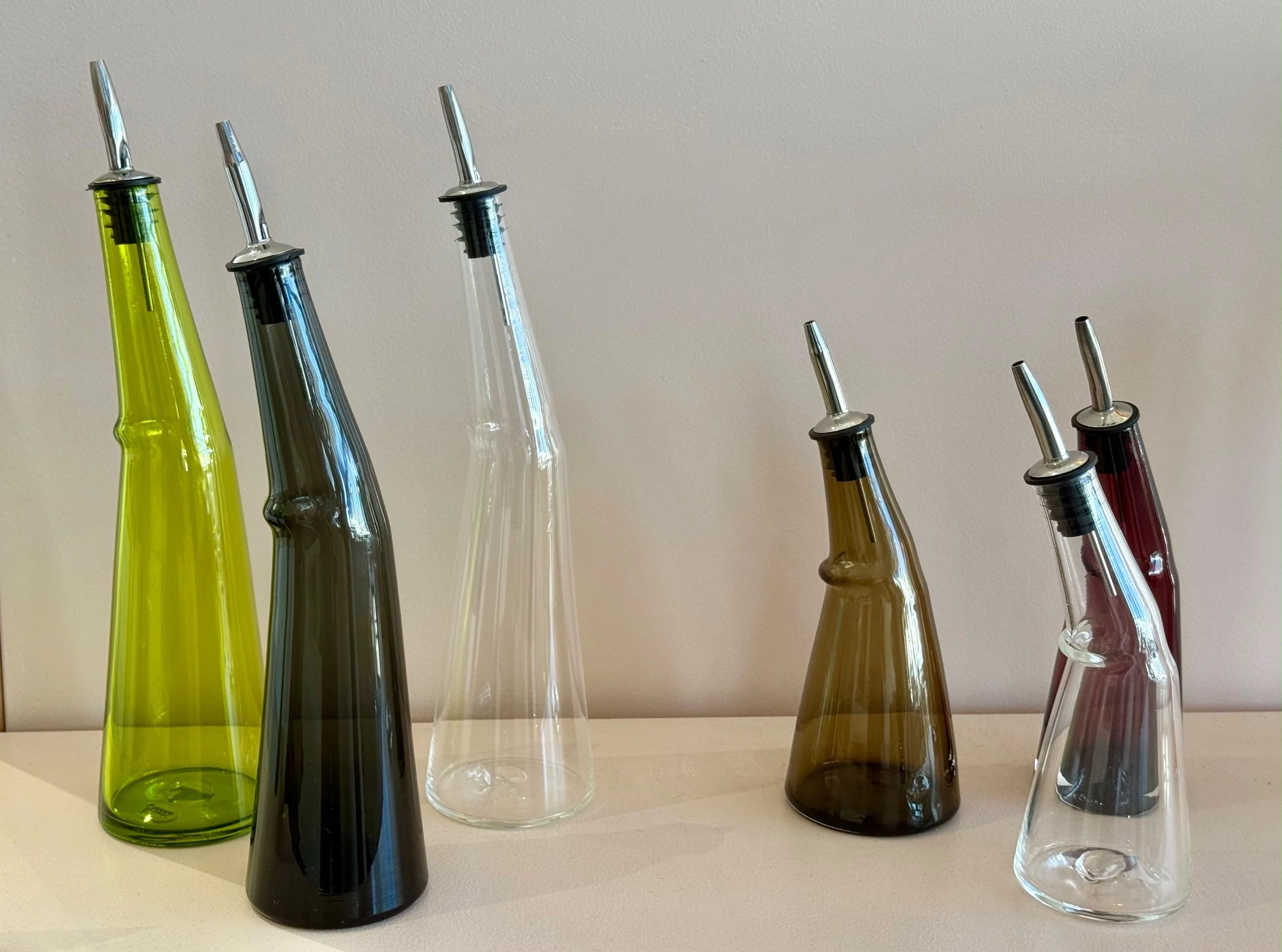
JamFactory Kink bottles
What Does It Take to Make Something by Hand?
The glassblowers may steal the show, but there was plenty happening in every studio.
The ceramics area was filled with wheels, moulds and more kilns than I expected to see. Give a skilled potter the same measured amount of clay and, in around three minutes, they can shape a bowl almost identical to the last.
That sounds quick. Designing the bowl in the first place is another matter. One JamFactory jug took three and a half years to develop. The designer reportedly tested more than a dozen versions because she refused to release a jug that dripped.
That is a remarkable amount of thought going into something most of us would simply fill with water and place on the table.
Handmade objects reflect countless decisions, tests and adjustments.
In the jewellery/metal studio, we learned how a flat sheet of silver or copper can be heated and hammered into a bowl, cup or even a teapot.
The furniture department had its own great story. Timber from a decommissioned 120-year-old jetty was heading for the woodchipper before JamFactory rescued it, restored it and used it on a government reception desk.
Then there were the pottery mugs with padlocks for handles. Their meaning was not immediately clear to me, which only made them more intriguing. I left wanting to know what inspired the artist and what the padlocks represented.
Across every department, the same qualities kept appearing: skill, patience, ingenuity and an impressive refusal to settle for near enough.
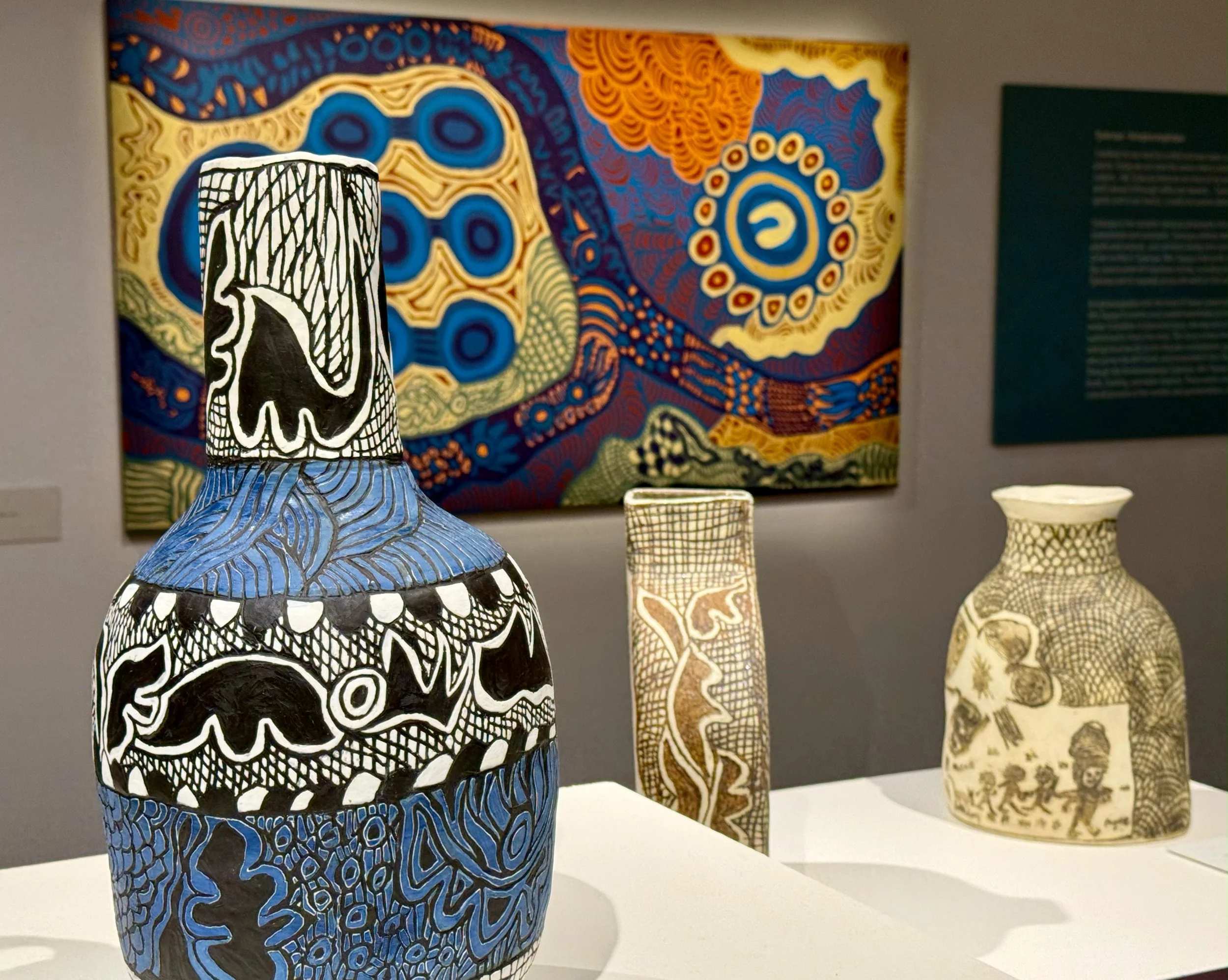
The finished objects reflect countless decisions, tests and adjustments.
Why Should You Take the Tour?
Catherine played a big part in making the tour memorable. Her apron was covered in brooches, pins and small objects, each carrying its own story. It immediately told us that she was not simply reciting information. She was part of this creative world.
One fact produced an audible gasp. Catherine told us JamFactory helped bring Chihuly in the Botanic Garden to Adelaide. It was the first major Chihuly garden exhibition staged in Australia and the Southern Hemisphere. During its seven-month run, Adelaide Botanic Garden recorded around 1.4 million visits.
For our group, the tour added enormous value to the experience. It provided access to working studios we would never have seen alone, along with a guide who knew her stuff and explained it clearly. When a question stumped Catherine, she made the effort to find someone who could answer it.
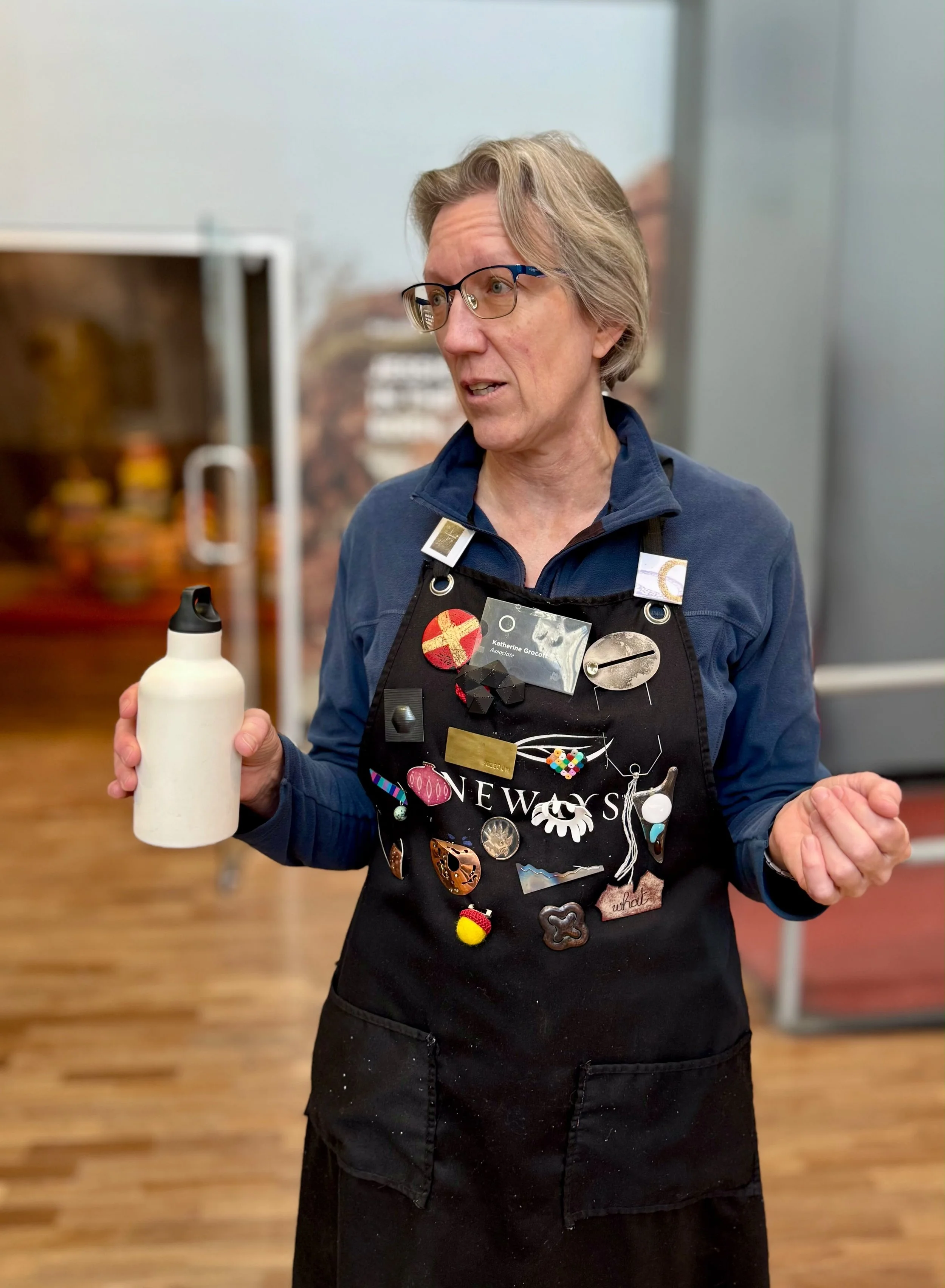
Catherine’s apron revealed her own connection to the creative community.
JamFactory currently offers free 30-minute public tours at 11am from Monday to Wednesday. Booked group tours cost $100 for up to 20 people, with additional guests charged at $5 each.
Without the tour, we would have seen an impressive gallery and shop. With it, we discovered what JamFactory really is.
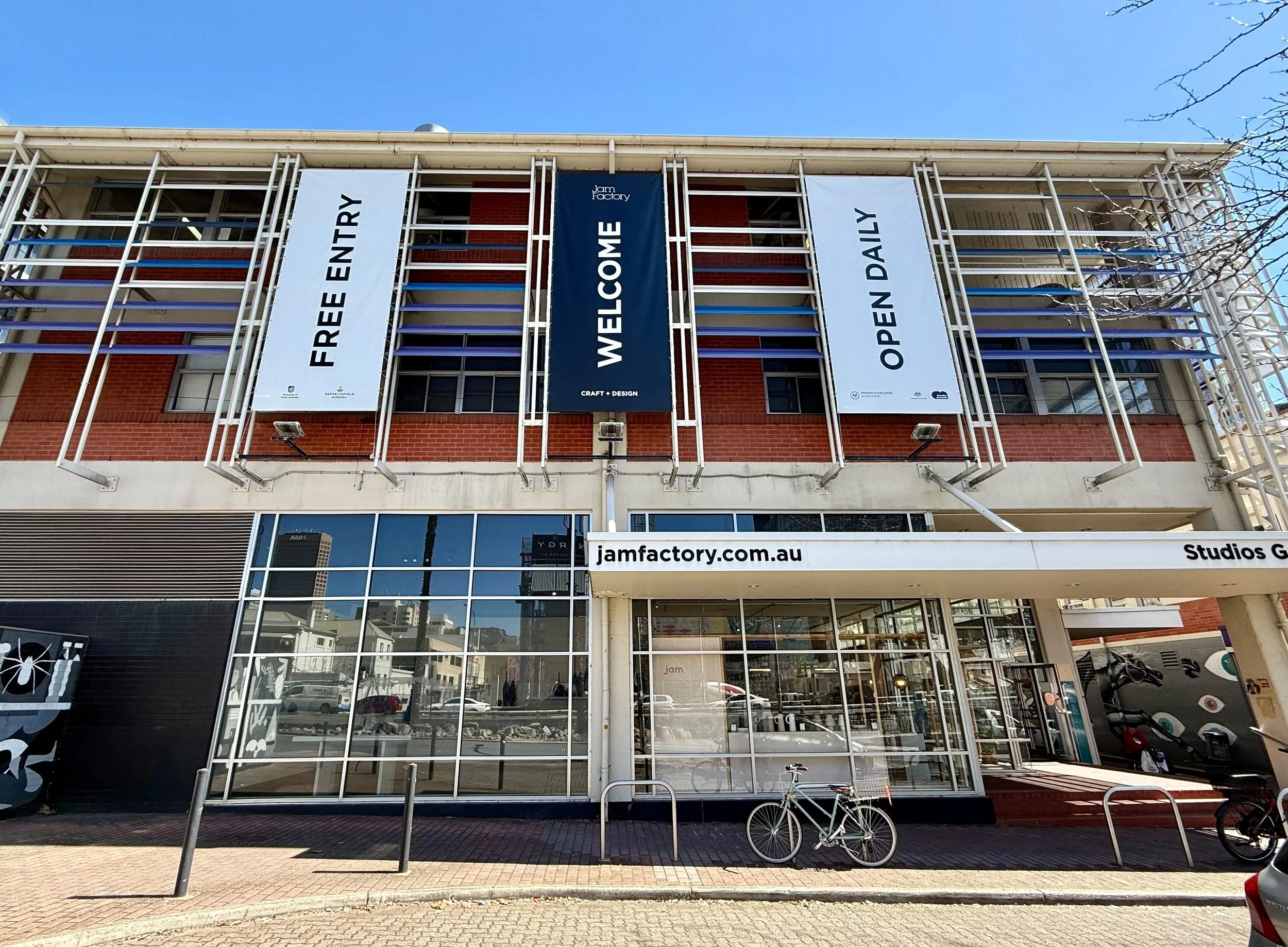
JamFactory’s Morphett Street home gives little indication of the operation waiting inside.

Photography credits: Brett Partington
Should you wish to receive Feature Stories, What’s On Guide, Event Reviews, Beyond SA to your inbox please subscribe below: